
Shruti Bhat PhD, MBA, Operations Excellence Expert
  • Home
  • Shruti
  • Operational Excellence Hub
  • OpEx Models
  • Writings
    • Process Improvement
    • Business Transformation
    • Innovation Management
    • Leading Research and Development
    • Developer's Diary
    • Business Continuity
    • Change Management
    • Digital Transformation
    • Quality Improvement and Compliance
    • Free eBooks and Whitepapers
    • Checklists and Templates
  • Books
  • Services
    • PharmaOps Consulting
    • Tara LeanWorks
    • Training Services
  • Blog
  • Insights
  • Case Studies
  • Patents
  • Print Publications
  • Videos
  • Contact

Improving Inventory Management in Prosthetic Supply Chains: How Lean Six Sigma and SKU Pareto Optimization Reduced Costs by 42% and Improved Patient Outcomes

3/26/2026

0 Comments

 
​Spotlight: What if reducing your inventory could actually increase your revenue, improve patient satisfaction, and eliminate stockouts? This real-world prosthetics case study we led shows how data-driven SKU optimization and Lean Six Sigma transformed operational performance—unlocking nearly $1M in profit gains.

Prosthetic providers must maintain inventories of numerous component sizes and configurations to support patient-specific prosthetic devices. However, excessive SKU variation and decentralized purchasing often lead to high carrying costs, obsolete inventory, and frequent stockouts of critical components.

This post presents a case study demonstrating how a mid-sized prosthetic services company applied Lean Six Sigma methodology and Pareto-based SKU optimization to redesign its inventory management system. The project resulted in significant improvements in inventory efficiency, reduced component lead times, improved patient comfort through faster fittings, and nearly $1 million in annual profit improvement.

The prosthetic services provider faced significant inefficiencies due to excessive SKU variation, decentralized inventory management, and lack of demand forecasting. These issues resulted in high carrying costs, frequent stockouts, and delayed patient fittings.

By implementing Lean Six Sigma using the DMAIC framework and conducting Pareto-based SKU analysis, the company identified that a small subset of SKUs drove the majority of demand. Strategic interventions—including SKU rationalization, centralized inventory planning, demand forecasting, and regional inventory hubs—enabled a comprehensive transformation.

The results were substantial:
  • 42% reduction in inventory carrying costs
  • 71% decrease in stockouts
  • 55% faster component availability
  • Nearly $1M increase in annual operating profit
Additionally, patient experience improved significantly due to reduced fitting delays and better component availability.

​Read the full success story below…
Improving Inventory Management in Prosthetic Supply Chains: How Lean Six Sigma and SKU Pareto Optimization Reduced Costs by 42% and Improved Patient Outcomes

​Prosthetic companies face a unique supply chain challenge. Unlike traditional manufacturing environments, prosthetic devices are highly customized medical products built from modular components such as prosthetic knees, feet, pylons, liners, and adapters. Each of these components exists in multiple sizes and mobility levels, creating large SKU catalogs.

To avoid delays during patient fittings, clinics often maintain significant local inventories. Over time this practice leads to three major operational problems such as:
  1. Excess working capital tied up in inventory
  2. Obsolete components due to design upgrades or low demand
  3. Stockouts of high-demand sizes despite large inventories

This case study involves a mid-size prosthetics provider with 18 clinics and 1 centralized fabrication lab serving approximately 4,800 patients annually, generating about $18.5M annual revenue. Their inventory included prosthetic knees, feet, pylons, liners, adapters. Components were stocked in multiple sizes and mobility-level variants. Details of the company have been kept anonymous to go with non-disclosure agreements.

The company leadership recognized that their inventory inefficiencies were negatively affecting both financial performance and patient experience and decided to have an Operational Excellence expert advise them.
 
Operational Problem
Before the operational improvement project began, the company maintained more than 520 component SKUs across clinics and the central warehouse. Inventory planning was largely decentralized, with individual clinics ordering components based on anticipated patient demand.

This approach created several inefficiencies:
  • Clinics stocked similar components redundantly
  • Rarely used sizes remained unused for long periods
  • High-demand sizes frequently ran out of stock
  • Technicians often had to delay fittings while waiting for parts
The average patient fitting cycle was delayed by up to 9 days due to component availability issues.
 
Operational Excellence Methodology
The company was recommended to adopt Lean Six Sigma using the DMAIC model (Define, Measure, Analyze, Improve, Control).

Tip: There are over 15 operational excellence models to choose from. And the choice depends on several parameters. You may checkout various OpEx models here and how to choose business process improvement methodology here.

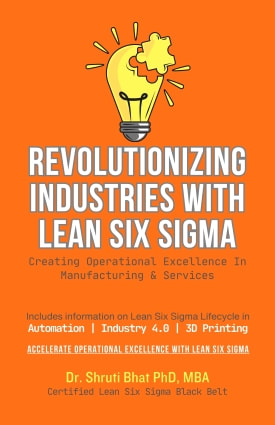
Tip: Checkout more about Lean Six Sigma in my book Revolutionizing Industries with Lean Six Sigma
Coming back to this case study, here Lean Six Sigma methodology was selected for three main reasons:
  1. Lean methods help eliminate waste such as excess inventory and redundant SKUs.
  2. Six Sigma analysis provides data-driven decision-making using demand patterns.
  3. The DMAIC framework supports structured operational transformation.

The project team consisted of:
  • Supply chain manager
  • Fabrication lab supervisor
  • Clinical prosthetist representative
  • Data analyst
  • Operational excellence lead
The project goals were defined and KPI metrics identified.

Measurement Phase
During the measurement phase, the team analyzed three years of historical inventory data.

Key metrics evaluated included:
  • Annual SKU usage
  • Stockout frequency
  • Inventory turnover
  • Carrying cost
  • component lead times
The results revealed a strong Pareto distribution in SKU demand.
Key Insights
  1. Approximately 20% of component sizes accounted for about 65% of total usage.
  2. The Pareto demand analysis revealed that many SKUs were rarely used.
 
Pareto Analysis
The SKU Pareto analysis revealed two important insights namely-

The SKU demand distribution showed that a small number of prosthetic component sizes are used far more frequently than others. Prosthetic feet sizes S23–S27 and knee modules M1–M3 accounted for the largest share of demand.

The cumulative demand curve demonstrated that the first 10 SKUs represent roughly 75% of annual demand, while the remaining SKUs contribute relatively little usage.

This pattern is common in prosthetic supply chains because most patients fall within a limited set of common limb sizes and mobility categories.
 
Root Cause Analysis
The operational analysis identified four root causes of the inventory problem.

First, each clinic maintained independent inventory ordering practices, which created redundant stocking across locations.

Second, the company lacked demand forecasting tools, meaning component purchases were reactive rather than data driven.

Third, the SKU catalog had expanded over time without structured lifecycle management, resulting in unnecessary component variations.

Fourth, there was no centralized inventory visibility system, preventing the redistribution of unused parts between clinics.
 
Improvement Strategy
The operational improvement program implemented four major changes.

1. SKU Rationalization
The team reduced the total SKU count from 520 to 360, eliminating rarely used component sizes and consolidating similar variants.

2. Centralized Inventory Planning
Inventory planning responsibility was moved from individual clinics to a central supply chain team.

3. Demand Forecasting
Historical patient data was used to forecast component demand by:
  • limb type
  • patient mobility classification
  • prosthetic configuration

4. Regional Inventory Hub
Instead of stocking large quantities in each clinic, the company created a regional inventory hub capable of supplying clinics within 24–48 hours.

operational results lean six sigma case study
​
The graphs below show a quick recap of improvements that happened after implementing the Lean Six Sigma operational excellence program.
​
average sku stocked
inventory turn over
component lead time
operating profit
inventory carrying cost
patient satisfaction
stockout rate
​
Inventory Waste Breakdown (Before and After Improvement)
The Inventory Waste Breakdown identifies the largest cost drivers and helps prioritize improvement initiatives both current and future.
​
inventory -waste breakdown before and after operational improvement

​Operational Excellence Dashboard

​
operational excellence dashboard
​What the dashboard shows operationally?
​

Supply Chain Efficiency
  • Inventory turnover increased significantly.
  • Carrying cost dropped substantially.
Service Level Improvement
  • Stockouts fell dramatically.
  • Lead time for prosthetic components improved.
Customer Experience
  • Faster fittings improved patient satisfaction.
 
Financial Impact
The reduction in excess inventory and improved component availability had a measurable financial impact.
inventory cost and profit impact
​The profit increase resulted from:
  • reduced inventory costs
  • higher clinic throughput
  • faster patient fittings
patient experience and comfort
Faster access to the correct prosthetic components allowed clinicians to complete fittings more quickly and with fewer rescheduled appointments.
 
Strategic Benefits
Beyond financial results, the project created several strategic advantages.

First, the company gained real-time visibility into component demand patterns, enabling more accurate supply planning.

Second, centralized inventory management improved supply chain resilience, ensuring that critical components remained available.

Third, the simplified SKU catalog reduced operational complexity for technicians and clinicians.

Finally, faster fitting cycles allowed clinics to treat more patients annually without increasing staff levels.
 
Conclusion
Inventory management is one of the most significant operational challenges facing prosthetic providers due to the large number of component sizes and configurations required for patient-specific devices.

This case study demonstrates how applying Lean Six Sigma principles combined with SKU Pareto analysis can significantly improve both the company’s profitability and patient satisfaction.

The table below summarizes the Operational Impact of the Transformation​
operational impact of transformation
​By reducing unnecessary SKU variation, implementing demand forecasting, and centralizing inventory management, the prosthetic provider achieved:
  • 42% reduction in inventory carrying cost
  • 71% reduction in stockouts
  • 55% faster component availability
  • nearly $1 million increase in annual operating profit

Equally important, the operational improvements enhanced patient comfort by enabling faster prosthetic fittings and reducing appointment delays.

This case study demonstrates that inventory complexity—not just inventory volume—is a primary driver of inefficiency in prosthetic supply chains. By leveraging Lean Six Sigma principles and Pareto-driven SKU optimization, organizations can simultaneously reduce costs, improve service levels, and enhance patient outcomes.

The key takeaway is clear: operational excellence in prosthetics organizations and healthcare supply chains requires a shift from reactive inventory practices to data-driven, centralized, and strategically optimized systems.
​
If your organization is struggling with excess inventory, stockouts, or long lead times, it’s time to rethink your supply chain strategy. Start by analyzing your SKU demand patterns and exploring Lean Six Sigma methodologies to unlock measurable performance gains.

Reach out today to assess your inventory system and identify immediate opportunities for cost reduction and service improvement.
Get in Touch
Disclaimer: This article reflects observed industry trends and professional perspectives and does not constitute regulatory, legal, or operational advice. Read full disclaimer here.

About the author:
Dr. Shruti Bhat is an Advisor in Operational Excellence and Business Continuity Across Pharma and MedTech Value Chains (end-to-end).
​
Keywords and Tags:
#LeanSixSigma #SupplyChainOptimization #InventoryManagement #HealthcareOperations #Prosthetics #OperationalExcellence #ProcessImprovement #ParetoAnalysis #DMAIC #HealthcareInnovation #CostReduction #PatientExperience #DataDrivenDecisions


Categories:  Operational Excellence Case Studies | Life Science Industry | Lean Six Sigma 

Follow Shruti on 
YouTube, LinkedIn

​Subscribe to Operational Excellence Academy YouTube channel:

operational excellence academy youtube channel
0 Comments

DMADV Operational Excellence Model in Pharma, Medical Devices, and Prosthetics: Enterprise-Wide Strategy for Quality by Design, Regulatory Compliance, and Sustainable Profit Growth

3/8/2026

0 Comments

 
​Spotlight: What if 70% of your quality problems, recalls, and margin erosion were locked in before your product ever left the design table?

Operational Excellence in Pharma, Medical Devices, and Prosthetics is too often treated as a downstream firefighting function. Yield issues. CAPAs. Recalls. Audit observations. Margin erosion.

But what if the real opportunity isn’t fixing broken processes — it’s preventing structural design weaknesses before they ever reach the market?

In this post, I outline how DMADV (Define–Measure–Analyze–Design–Verify) can be deployed not just as a Design for Six Sigma tool in R&D, but as a full-scale enterprise Operational Excellence model. When properly institutionalized, DMADV becomes the governance backbone that integrates:
  • Quality by Design (QbD)
  • Regulatory strategy and validation readiness
  • Risk-based decision making
  • Design-to-cost and manufacturability
  • Portfolio discipline and capital allocation
  • Lifecycle profitability

For medical device and prosthetics companies, this approach directly translates into fewer recalls, lower warranty exposure, stronger reimbursement positioning, and improved EBITDA. For pharma organizations, it strengthens submission readiness, reduces late-stage remediation, and improves R&D ROI over multi-year horizons.

Operational excellence is not about optimizing yesterday’s design. It is about engineering tomorrow’s reliability, compliance, and margin — up front. Checkout the full post below...

If your organization is:
– Scaling new product pipelines
– Struggling with recurring design-related quality events
– Preparing for regulatory inspections or global expansion
– Looking to improve R&D productivity and lifecycle profitability

I work with leadership teams to embed DMADV as an enterprise operating model — not a slide deck exercise, but a governance and execution system.

Message me if you’d like to explore how this framework could be applied to your portfolio, manufacturing network, or growth strategy.
DMADV Operational Excellence Model in Pharma, Medical Devices, and Prosthetics: Enterprise-Wide Strategy for Quality by Design, Regulatory Compliance, and Sustainable Profit Growth
Executive Summary
Operational Excellence (OpEx) in the pharmaceutical, medical device, and prosthetics sectors has traditionally emphasized post-launch optimization—reducing deviations, improving yield, and eliminating waste through reactive process improvement models. However, the most consequential drivers of cost, compliance exposure, and profitability erosion are often embedded much earlier in the product lifecycle. Design-stage ambiguity, incomplete translation of stakeholder requirements, weak measurement systems, inadequate risk modeling, and insufficient manufacturability planning introduce latent vulnerabilities that manifest later as recalls, warning letters, CAPAs, supply instability, and margin compression.


The Define–Measure–Analyze–Design–Verify (DMADV) framework repositions Operational Excellence upstream. Rather than serving solely as a Design for Six Sigma methodology within R&D, DMADV functions as a structured, phase-gated governance model that aligns strategy, regulatory requirements, risk management, financial discipline, and scalable execution from concept through commercialization. When integrated with Quality by Design (QbD), Process Analytical Technology (PAT), device design controls, and global regulatory expectations, DMADV becomes the operating architecture through which quality, compliance, and profitability are engineered simultaneously.

This post demonstrates that DMADV delivers enterprise value across five critical dimensions: strategic portfolio alignment, prevention of cost of poor quality (COPQ), embedded regulatory compliance, risk transparency at executive decision gates, and sustainable lifecycle profitability. It further articulates how DMADV enhances product robustness and margin expansion in medical devices and prosthetics by integrating human factors, reliability modeling, modular architecture, and design-to-cost principles early in development. Finally, it outlines how DMADV can be institutionalized beyond R&D—governing manufacturing expansion, digital health platforms, supplier networks, and enterprise transformation initiatives—thereby functioning as a company-wide OpEx engine rather than a project-level tool.

When deployed at scale, DMADV transforms organizations from reactive remediation cultures to proactive design-driven enterprises, systematically reducing risk while accelerating innovation and financial performance.

DMADV as an Operational Excellence Model in Pharma–MedTech
Operational excellence is often framed as improving what already exists (e.g., DMAIC). However, many of the most expensive quality and supply problems in pharma–MedTech are “designed in” early—through design decisions, requirements gaps, weak measurement of customer needs, or manufacturability blind spots. DMADV (Define–Measure–Analyze–Design–Verify), also known as Design for Six Sigma (DFSS), is the model used to design new products, services, or processes to achieve high quality levels from the start.

DMADV may be used to develop new processes or products at Six-Sigma-quality levels. Additionally, DFSS/DMADV is a structured approach to lead design teams through DMADV tollgates using the proper tools (e.g., QFD).

Note that, DMADV must be properly integrated with QbD (Quality-by-design), all applicable ICH guidances, PAT (Process Analytical Technique) as well as applicable regulatory frameworks when used in the life sciences R&D. Hence, extensive customization and strategic planning is involved while implementing DMADV for life sciences sector.

But on the other hand, using DMADV for life sciences research and product development improves R&D productivity and ROI exponentially over the years, along with giving products with expanded life cycle, competitive edge making them reach wider and penetrate deeper in their market segment.
 
Designing Quality In—Up Front, At Scale, and By Design
Operational excellence (OpEx) in the pharmaceutical and medical technology sectors is frequently framed as post hoc improvement—optimizing yield, reducing deviations, or eliminating waste in existing processes through methodologies such as DMAIC. While process improvement remains essential, a disproportionate share of quality failures, supply disruptions, recall events, regulatory findings, and lifecycle erosion originates not in operations, but in early-stage design decisions. Requirements ambiguity, insufficient translation of patient needs into engineering specifications, weak measurement systems, poor manufacturability alignment, and incomplete risk modeling embed latent defects into products and processes long before commercialization.

The Define–Measure–Analyze–Design–Verify (DMADV) model—also known as Design for Six Sigma (DFSS)—addresses this systemic vulnerability. In life sciences, DMADV should not be positioned merely as a design tool or episodic project methodology. Properly deployed, it becomes a phase-gated Operational Excellence operating model that governs how innovation moves from concept to scalable, compliant, and economically robust execution. It embeds quality-by-design principles, aligns with global regulatory expectations, and institutionalizes risk-informed decision-making at the enterprise level.

This post examines DMADV as a strategic OpEx model for pharma and MedTech organizations and articulates how it drives sustained productivity, compliance resilience, and lifecycle value.
 
Reframing DMADV: From Methodology to Operating System
DMADV is frequently described as a structured approach for designing new products or processes to achieve Six Sigma quality levels. While technically accurate, this framing understates its organizational impact. In regulated industries, DMADV functions as a governance architecture that integrates strategy, risk management, regulatory alignment, product development, and operational readiness.

At its core, DMADV provides:
  • A phase-gated governance structure with defined tollgates and executive decision criteria
  • A disciplined translation of stakeholder voice into measurable Critical-to-Quality (CTQ) characteristics
  • Evidence-based evaluation of design alternatives
  • Built-in design-for-manufacturability, design-to-cost, and supply chain integration
  • Verification evidence supporting validation readiness and smooth technology transfer

​In the life sciences sector, DMADV must be harmonized with Quality by Design (QbD) principles as articulated in ICH guidelines (including ICH Q8, Q9, and Q10), as well as Process Analytical Technology (PAT) frameworks and device design control requirements under global regulatory regimes. When integrated correctly, DMADV becomes the structural backbone that operationalizes QbD—not an adjunct tool, but the execution engine of it.
 
Why DMADV Is an Operational Excellence Model
Operational excellence is defined not only by efficiency, but by predictable, scalable, compliant performance that delivers sustained enterprise value. DMADV supports this definition across five structural dimensions.

Read More
0 Comments

Design for Six Sigma (DFSS) in Life Sciences: A Model for Predictive Quality in Pharmaceuticals, Medical Devices, Biotechnology, and Prosthetics

3/7/2026

0 Comments

 
Spotlight: Most life sciences companies still treat quality as a compliance exercise—Documentation. Audits. CAPAs. Deviations. But by the time quality shows up in manufacturing, the most important design decisions have already been made. And that’s where the real risk lives.
​
In pharmaceuticals, medical devices, biotech, and prosthetics, the organizations that consistently outperform on regulatory approval, product reliability, and speed-to-market have one thing in common:
  • They engineer quality before the first batch, device build, or clinical unit is produced.
  • That capability has a name: Design for Six Sigma (DFSS).

This post presents a short, yet comprehensive piece on DFSS as an operational excellence model for the life sciences sector. Read full post below…
Design for Six Sigma (DFSS) in Life Sciences: A Model for Predictive Quality in Pharmaceuticals, Medical Devices, Biotechnology, and Prosthetics
Executive Summary:
Regulated life sciences industries are facing a structural shift.

Regulators are no longer satisfied with validation evidence alone. Increasingly, they want to see scientific justification behind design decisions, statistically supported control strategies, and clear traceability between risk management, design inputs, and product performance.

This is where Design for Six Sigma (DFSS) becomes strategically important.

DFSS moves quality upstream—from reactive defect detection to predictive engineering. Instead of correcting problems during manufacturing or post-market surveillance, DFSS embeds statistical rigor, risk modeling, and experimental optimization into the earliest stages of development.

When applied correctly, DFSS strengthens several critical areas of regulated product development:
  • In pharmaceuticals, it operationalizes Quality by Design by defining critical quality attributes, developing statistically supported design spaces, and ensuring process capability before commercial scale-up.
  • In medical devices, DFSS integrates design controls, reliability engineering, and human factors analysis to reduce field failures, MDR reportable events, and costly corrective actions.
  • In biotechnology, it provides tools to manage the inherent variability of biological systems through structured experimentation and robust control strategies.
  • And in prosthetics and assistive technologies, DFSS connects mechanical engineering, additive manufacturing, and patient-centered design to deliver durable and clinically effective solutions.

The strategic impact goes beyond engineering!

Organizations that embed DFSS into their development architecture typically experience:
  • Fewer batch failures and deviations
  • Higher process capability during scale-up
  • Stronger regulatory submissions
  • Reduced post-market risk
  • Faster and more predictable product launches

Most importantly, DFSS elevates quality from a compliance function to a core innovation capability.

In a world where biologics, combination products, AI-enabled devices, and personalized therapies are becoming the norm, predictive quality engineering will define the next generation of life sciences leaders.

Design for Six Sigma in Life Sciences: From Compliance to Predictive Quality
Across the life sciences sector, quality has traditionally been framed through the lens of compliance. Pharmaceutical companies, medical device manufacturers, biotechnology innovators, and prosthetics developers operate within some of the most heavily regulated environments in the global economy. Regulators require validated processes, traceable design decisions, and comprehensive documentation to ensure patient safety.

Yet compliance alone does not guarantee quality. It only confirms that the organization followed procedures after the fact.

The next frontier for the industry lies in shifting quality upstream—into the design of products and processes themselves. This is where Design for Six Sigma (DFSS) becomes transformative. Rather than correcting defects after production begins, DFSS focuses on designing systems that are statistically capable of delivering consistent, reliable performance from the outset.

In regulated life sciences environments, this distinction is profound. DFSS is not simply a quality methodology. It becomes a strategic capability—one that integrates scientific rigor, engineering discipline, and regulatory defensibility into the earliest stages of product development.

The organizations that master this capability move beyond reactive quality management toward predictive quality engineering.
 
The Regulatory Reality of Life Sciences Innovation
Few industries operate under scrutiny as intense as life sciences. A single failure can translate directly into patient harm, product recalls, regulatory sanctions, or long-term reputational damage.

Global regulatory frameworks—from FDA or other regulatory agency current Good Manufacturing Practices to EU Medical Device Regulation and ICH pharmaceutical quality guidelines—place strong emphasis on design controls, risk management, and lifecycle product oversight. These frameworks increasingly expect manufacturers to demonstrate not only that their products meet specifications, but that those specifications are scientifically justified.

In practice, this means regulators are asking deeper questions. Why were these design parameters chosen? What evidence demonstrates that they will remain stable during scale-up? What data confirms that the system can tolerate natural variability without compromising patient safety?

Traditional quality approaches often struggle to answer these questions convincingly. They tend to rely on retrospective validation, incremental testing, and procedural compliance. DFSS approaches the problem differently. It embeds statistical modeling, risk analysis, and experimental optimization directly into the development process, creating a defensible scientific foundation for every critical design decision.

For regulators, this produces transparency. For organizations, it produces resilience.
 
Designing Quality in Pharmaceuticals
In the pharmaceutical industry, DFSS aligns naturally with the philosophy of Quality by Design (QbD). QbD encourages developers to understand the relationship between formulation variables, process parameters, and product performance. DFSS provides the engineering structure needed to operationalize that philosophy.
​
Through structured experimentation and statistical modeling, development teams can define critical quality attributes and identify the process conditions required to consistently achieve them. 

Read More
0 Comments

Design for Six Sigma (DFSS) in Life Sciences: Building Predictive Quality, Regulatory Confidence, and Operational Excellence

3/7/2026

0 Comments

 
Spotlight: Most life sciences companies still try to fix quality problems after launch. But the organizations leading regulatory approvals, stable manufacturing scale-ups, and reliable clinical outcomes are doing something different:
  • They design quality into the product from day one.
  • That shift is driven by Design for Six Sigma (DFSS) — a methodology that transforms product development from reactive troubleshooting into predictive engineering and regulatory defensibility.

​Design for Six Sigma (DFSS) is quietly becoming one of the most powerful Operational Excellence models in life sciences.

While Lean and DMAIC improve manufacturing performance after production begins, DFSS moves the quality conversation upstream—into product design, process architecture, and risk modeling. In regulated sectors such as pharmaceuticals, medical devices, biotechnology, and prosthetics, DFSS does more than improve quality metrics. It strengthens:
  • Regulatory defensibility
  • Product reliability
  • Manufacturing scale-up success
  • Patient safety outcomes

When integrated with Quality by Design, design controls, ISO 13485, and ICH Q10, DFSS becomes the innovation engine of Operational Excellence.

Organizations that embed statistical engineering early in development see measurable gains:
  • Fewer deviations and CAPAs
  • Reduced batch failures
  • Faster regulatory approvals
  • Improved process capability
  • Lower recall and litigation risk

Quality in life sciences cannot be inspected into a product. It must be engineered into the system from the beginning. That is the promise of Design for Six Sigma!

Checkout the full blogpost below…
Design for Six Sigma (DFSS) in Life Sciences: Building Predictive Quality, Regulatory Confidence, and Operational Excellence
​Design for Six Sigma (DFSS) is a structured, data-driven methodology for designing products and processes that achieve Six Sigma quality levels at launch. Unlike traditional improvement methodologies that address defects after they occur, DFSS focuses on designing quality and reliability into systems from the earliest stages of development.

In regulated life sciences sectors—pharmaceuticals, medical devices, biotechnology, and prosthetics—DFSS serves not only as a quality framework but as a risk management and regulatory compliance enabler. DFSS operates within Good Practice (GxP) environments, aligns with global regulatory frameworks, and performs as an Operational Excellence (OpEx) model. DFSS integrates with standards such as ISO 13485 and ICH Q10.

DFSS, when integrated with Quality by Design and formal design controls, becomes a foundational pillar of modern regulated product development. DFSS becomes the innovation engine of OpEx.

By embedding statistical rigor, human factors engineering, and lifecycle risk controls into early development, DFSS reduces clinical, regulatory, manufacturing, and post-market risk. The methodology strengthens design decisions with quantitative evidence and provides the structured documentation necessary to support regulatory submissions.

Why DFSS in Life Sciences?

Pharmaceutical Sector
Applications include:
  • Quality by Design (QbD) integration
  • Critical Quality Attribute (CQA) definition
  • Design Space development
  • Process Analytical Technology (PAT)
  • Tech transfer robustness
DFSS enhances:
  • Process capability (Cpk ≥ 1.33–1.67 for validated processes)
  • Reduced batch failures
  • Fewer deviations and CAPAs
  • Accelerated regulatory approval via strong design rationale

Medical Devices
Applications include:
  • Design controls and traceability
  • Risk mitigation via DFMEA
  • Human factors validation
  • Sterilization and packaging validation
  • Reliability and durability testing
DFSS reduces:
  • Field corrective actions
  • MDR reportable events
  • Post-market surveillance risk
  • Rework and scrap during scale-up

Biotechnology
Applications include:
  • Bioprocess scale-up (upstream/downstream)
  • Cell line robustness
  • Viral clearance validation
  • Cold-chain reliability
DFSS enables statistically justified control strategies in high-variability biological systems.

Prosthetics and Assistive Technologies
Applications include:
  • Biomechanical performance optimization
  • Patient-specific customization
  • Additive manufacturing process validation
  • Long-term fatigue and wear testing
Here, DFSS integrates mechanical engineering, human factors, and clinical performance to ensure functional reliability and patient safety.

DFSS Methodologies
Multiple DFSS roadmaps exist. Selection depends on organizational maturity and product complexity.

DMADV (Define–Measure–Analyze–Design–Verify)
Most widely adopted for product and service design.
  • Define: Identify customers, critical-to-quality (CTQ) attributes, and business case.
  • Measure: Translate voice of the customer (VOC) into quantifiable requirements.
  • Analyze: Develop design concepts and assess risk and capability.
  • Design: Optimize the design using statistical modeling and simulation.
  • Verify: Validate performance through pilot builds and reliability testing.

IDOV (Identify–Design–Optimize–Validate)
Common in engineering-intensive industries.
  • Identify: Define opportunity, stakeholders, and CTQs.
  • Design: Develop high-level architecture.
  • Optimize: Apply advanced modeling and tolerance analysis.
  • Validate: Confirm capability under real-world conditions.
 
DFSS Methodology in Regulated Development
In regulated industries, the most widely adopted DFSS roadmap is the DMADV model: Define, Measure, Analyze, Design, and Verify. This framework aligns closely with regulatory design control requirements.

The Define phase establishes the intended use of the product, patient and clinician needs, regulatory pathways, and critical-to-quality attributes. Deliverables typically include the design and development plan, risk management plan, and regulatory strategy documentation.

During the Measure phase, the voice of the customer is translated into measurable engineering specifications. Organizations identify CQAs or CTQs and establish clear acceptance criteria supported by traceability matrices and early risk registers.

The Analyze phase focuses on identifying potential failure modes and critical process parameters. Tools such as DFMEA and Design of Experiments (DOE) are used to model system behavior and explore design sensitivities. This phase often produces statistical tolerance models and early design space definitions.

In the Design phase, the product architecture, formulation, or device geometry is optimized. Environmental robustness, sterilization processes, packaging validation, and manufacturing readiness plans are finalized.

Finally, the Verify phase confirms that the design performs as intended. This includes process validation activities such as Installation Qualification (IQ), Operational Qualification (OQ), and Performance Qualification (PQ), as well as reliability testing, usability validation, and clinical validation when required. These activities culminate in regulatory documentation packages such as the Design History File (DHF) or Technical File.
 
Hybrid DFSS Model: DMADV and IDOV Integration
Some organizations adopt a hybrid DFSS model that integrates the DMADV framework with the Identify–Design–Optimize–Verify (IDOV) methodology. DMADV provides strong governance and regulatory traceability, while IDOV introduces deeper statistical optimization.

In this hybrid model, the Identify, Design, and Optimize phases of IDOV occur within the Analyze and Design phases of DMADV. Advanced modeling tools such as response surface analysis, Monte Carlo simulation, and finite element analysis may be used to explore parameter sensitivity and optimize design performance before verification activities begin.

The final verification stage includes process validation, stability studies, reliability testing, usability validation, and clinical validation where applicable. Deliverables typically include updated risk management files, statistical justification packages, and regulatory technical documentation.

Quality Maturity Mapping and Organizational Evolution
DFSS plays a significant role in advancing quality maturity within regulated organizations.

Within the ISO 13485 maturity model, organizations evolve from simple procedural compliance toward predictive quality systems capable of anticipating failures before they occur. DFSS provides the quantitative engineering framework that enables this transition.

Similarly, within the ICH Q10 pharmaceutical quality system model, DFSS helps organizations progress from basic GMP compliance to fully adaptive pharmaceutical systems characterized by statistically defined design spaces and lifecycle predictive control.

ISO 13485 Maturity Model
Level 1 – Procedural Compliance
Level 2 – Structured Design Controls
Level 3 – Risk-Based Engineering Organization
Level 4 – Predictive Quality System
Level 5 – Enterprise Predictive QMS

DFSS acts as the quantitative engineering layer elevating organizations from documentation-driven to predictive.

ICH Q10 Maturity Model
Level 1 – GMP Compliance
Level 2 – QbD Awareness
Level 3 – Statistically Defined Design Space
Level 4 – Lifecycle Predictive Control
Level 5 – Adaptive Pharmaceutical System

DFSS converts QbD philosophy into statistically defensible lifecycle robustness.
 
Business and Risk Impact

Financial Performance
  • Reduced recalls
  • Reduced batch rejection
  • Lower warranty reserves
  • Lower litigation exposure
  • Reduced consent decree risk
Clinical and Patient Outcomes
  • Reduced adverse events
  • Improved therapeutic consistency
  • Enhanced device reliability
  • Greater patient adherence
Time-to-Market Acceleration
  • Reduced clinical delays
  • Improved PPQ success
  • Reduced scale-up instability
 
DFSS as an Operational Excellence Model
Traditionally, Operational Excellence initiatives emphasize Lean principles for waste reduction and DMAIC methodologies for defect reduction after production begins. While these approaches improve operational performance, they primarily address issues after they arise.

DFSS represents a shift toward preventive Operational Excellence. By embedding predictive engineering methods upstream in product development, DFSS reduces the likelihood of process instability, batch rejection, product complaints, and costly late-stage design changes.

Within an enterprise OpEx architecture, DFSS functions as the innovation engine. It governs new product and process development, supports commercialization and technology transfer, and complements Lean and DMAIC methods used during routine manufacturing operations.

Financial benefits emerge through several channels. Preventive design reduces the cost of poor quality, improves speed-to-market by avoiding development delays, increases manufacturing stability, and lowers regulatory risk exposure.
 
Challenges and Mitigation
Despite its benefits, implementing DFSS can present organizational challenges. In some cases, teams focus excessively on documentation without applying rigorous statistical analysis. This can be mitigated by emphasizing quantitative engineering training and data-driven decision making.

Resistance may also arise from research and development teams unfamiliar with structured statistical methods. Demonstrating the efficiency and insight provided by Design of Experiments often helps overcome this resistance.

Regulatory conservatism can also slow adoption. Early engagement with regulators and transparent statistical justification strategies helps address these concerns. Finally, cross-functional collaboration is essential, as DFSS requires coordinated efforts among engineering, quality, regulatory, and manufacturing teams.
 
Conclusion
Design for Six Sigma in life sciences is far more than a design methodology. It functions as a regulatory defensibility engine, a lifecycle risk compression system, and a foundational component of modern Operational Excellence strategies.

When integrated with Quality by Design principles and formal regulatory design controls, DFSS transforms quality management from a reactive compliance exercise into a predictive engineering discipline. Organizations that adopt this approach gain not only regulatory confidence but also improved product reliability, faster development timelines, and stronger patient outcomes.

If your organization is navigating regulated product development, design controls, or Quality by Design implementation, DFSS can dramatically improve both regulatory outcomes and operational performance.

I work with life sciences organizations to:
  • Implement DFSS frameworks in regulated environments
  • Strengthen regulatory design control systems
  • Integrate QbD with statistical engineering methods
  • Improve process capability and scale-up success
  • Build predictive quality systems aligned with ISO 13485 and ICH Q10

If you're exploring Operational Excellence transformation, regulatory readiness, or advanced quality engineering strategies, let's connect.
Get in Touch
Disclaimer: This article reflects observed industry trends and professional perspectives and does not constitute regulatory, legal, or operational advice. Read full disclaimer here.

About the author:
Dr. Shruti Bhat is an Advisor in Operational Excellence and Business Continuity Across Pharma and MedTech Value Chains (end-to-end).

Keywords and Tags:

#DesignForSixSigma #DFSS #OperationalExcellence #QualityByDesign #LifeSciencesInnovation #PharmaceuticalQuality #MedicalDeviceEngineering #BiotechManufacturing #RegulatoryCompliance #ISO13485 #ICHQ10 #RiskManagement #ProcessCapability #QualityEngineering #HealthcareInnovation
​​
​​Categories:  Operational Excellence | Life Science Industry | OpEx Models

​Follow Shruti on YouTube, LinkedIn

​Subscribe to Operational Excellence Academy YouTube channel:

Picture
0 Comments

DMAIC as an Operational Excellence Model in Pharma and MedTech: A Data-Driven Framework for Regulatory Compliance, Process Capability, and Sustainable Performance

3/2/2026

0 Comments

 
Spotlight: Operational Excellence in pharma and MedTech cannot rely on ad hoc continuous improvement. In regulated, risk-sensitive environments, improvement must be statistically defensible, governance-driven, and inspection-ready.

DMAIC (Define–Measure–Analyze–Improve–Control) is often viewed as a Six Sigma problem-solving tool. In reality, when institutionalized properly, it functions as a full Operational Excellence model. It embeds executive sponsorship, tollgate discipline, measurement system validation, root cause confirmation, structured solution design, and sustained process control into a repeatable management system.

In industries governed by the drug regulatory administration and aligned to frameworks like ICH Q10, that rigor matters. DMAIC supports CAPA robustness, improves process capability (Cpk/Ppk), reduces cost of poor quality, and strengthens inspection readiness—while directly linking operational metrics to financial outcomes.

DMAIC is not just about fixing defects. It is about institutionalizing evidence-based decision-making across the enterprise.

If you’re in pharma or MedTech, the real question is not whether you run DMAIC projects. It’s whether DMAIC is embedded as your operating system for sustainable performance.
​
Checkout the full post below on how DMAIC is one of the best operational excellence model for the life sciences business.
DMAIC as an Operational Excellence Model in Pharma and MedTech_A Data-Driven Framework for Regulatory Compliance, Process Capability, and Sustainable Performance
DMAIC as an Operational Excellence Model in Pharma–MedTech

Executive Summary
Pharmaceutical and MedTech organizations operate in an environment defined by regulatory scrutiny, patient safety imperatives, complex global supply chains, and escalating cost pressures. In this context, traditional continuous improvement approaches—while valuable—often lack the statistical rigor, governance discipline, and sustainability mechanisms required to deliver durable, inspection-ready results.

DMAIC (Define–Measure–Analyze–Improve–Control), widely recognized as the core framework of Six Sigma, is typically deployed as a structured problem-solving methodology. However, when institutionalized across the enterprise, DMAIC functions as a comprehensive Operational Excellence (OpEx) model rather than a standalone improvement tool.

This post positions DMAIC as a management system for pharmaceutical and MedTech organizations seeking measurable defect reduction, validated root cause elimination, improved process capability (Cpk/Ppk), and sustained compliance with regulatory frameworks.

Unlike ad hoc improvement efforts, DMAIC embeds governance through formal tollgates, executive sponsorship, and defined deliverables. It mandates measurement system validation before analysis, requires statistical confirmation of causal drivers, integrates structured risk assessment during solution design, and institutionalizes gains through control plans, monitoring systems, and documented response mechanisms. These features make DMAIC particularly well-suited to regulated manufacturing environments where audit defensibility, CAPA effectiveness, and lifecycle management are critical.
​
When adopted as an OpEx architecture, DMAIC enables:
  • Enterprise-wide alignment between strategy, quality, operations, and finance
  • Reduction of cost of poor quality (COPQ), including scrap, rework, complaints, and recall risk
  • Strengthened CAPA robustness and inspection readiness
  • Improved process capability and right-first-time manufacturing
  • Sustainable performance improvement embedded within the Quality Management System (QMS)

For pharma and MedTech leaders, the strategic opportunity is clear: DMAIC should not be confined to isolated Six Sigma projects. It should serve as the disciplined, data-driven operating backbone for Operational Excellence—linking regulatory compliance, patient safety, and financial performance into a single, repeatable management system.

A Governance-Driven, Data-Intensive System for Sustained Performance
DMAIC—Define, Measure, Analyze, Improve, Control—is widely recognized as the core execution framework of Six Sigma and Lean Six Sigma. In many organizations, however, it is deployed narrowly as a problem-solving tool rather than as an enterprise-level operating model. Within the pharmaceutical and MedTech sectors—where regulatory compliance, patient safety, process capability, and cost discipline converge—DMAIC can and should function as a comprehensive Operational Excellence (OpEx) system.
​
This blogpost reframes DMAIC not as a project methodology alone, but as a structured management system capable of governing quality, performance, and risk across the value chain. When institutionalized correctly, DMAIC becomes a repeatable architecture for evidence-based decision-making, financial stewardship, and regulatory alignment.
 
The Strategic Context: Why Pharma–MedTech Requires More Than Ad Hoc Improvement
Pharma and MedTech organizations operate within a highly regulated, risk-sensitive environment shaped by:

Read More
0 Comments

How to Build a Lean Daily Management System That Actually Drives Results

6/20/2025

0 Comments

 
​Most Lean Daily Management Systems look great during rollout.

Too many of them look good on paper—but fail on the floor.
Whiteboards go up. KPIs get posted. Huddles start.

And yet—nothing changes-
  • The floor still runs reactive.
  • Problems don’t get solved.
  • Leaders still manage by the numbers, not by behavior.
  • And frontline teams don’t own the outcomes.

Here’s the hard truth:
A Lean Daily Management System isn’t about tracking activity.
It’s about creating daily habits that align people, solve problems, and build accountability.

The best systems we have helped build share three traits:
  1. Visuals that drive decisions — not just data dumps
  2. Short, sharp huddles that solve problems at the right level
  3. Leaders who coach, not just check

A Lean Daily Management System should do more than measure. It should drive clarity, discipline, and momentum—every single day.
And it should be a system that works for your operations, your people, and your constraints.

If you're building or rebooting daily management and want a system that sticks—this is the work we do.
Through hands-on consulting and practical team training, we help organizations turn their daily routines into a culture shift.

DM me or book a discovery call to learn how we can build a system that actually sticks.
How to Build a Lean Daily Management System That Actually Drives Results
Get in Touch
Operational Excellence Case Studies at: https://www.drshrutibhat.com/blog/category/case-studies

Keywords and Tags:
#LeanDailyManagement #OperationalDiscipline #ContinuousImprovement #LeanLeadership #ProblemSolvingCulture #VisualManagement #DailyAccountability #LeadershipSystems #LeanExecution #GembaManagement #LeanManagement #DailyManagement #OperationalExcellence #GembaLeadership #KaizenCulture #LeanTransformation #LeadershipDevelopment #DrShrutiBhat
​​
Categories:  Operational Excellence | Leadership| Lean

​Follow Shruti on Twitter, YouTube, LinkedIn

​​Subscribe to Operational Excellence Academy YouTube channel:

Picture
0 Comments

Lean Six Sigma: Transforming the Packaging Industry!

1/31/2025

0 Comments

 
Spotlight: The packaging sector faces constant pressure to reduce waste, enhance efficiency, and meet sustainability goals—all while maintaining top-quality standards. Lean Six Sigma is the solution, helping companies:
  • Eliminate waste & reduce costs
  • Optimize production efficiency
  • Enhance product quality & minimize defects
  • Drive sustainability & improve supply chain management
From cutting material waste by 15% to reducing energy costs by 20%, Lean Six Sigma is a game-changer for packaging companies! Read full article below on how your business can benefit …
Lean Six Sigma_ Transforming the Packaging Industry
The packaging industry is an essential part of modern commerce, serving sectors such as food and beverage, pharmaceuticals, consumer goods, and logistics. However, this industry is constantly under pressure to improve efficiency, reduce waste, ensure sustainability, and maintain high-quality standards while meeting customer demands. In response to these challenges, many packaging companies have turned to Lean Six Sigma—a methodology that integrates Lean principles (focused on reducing waste and improving flow) with Six Sigma techniques (focused on reducing variability and improving quality).

By implementing Lean Six Sigma, the packaging industry has seen a significant transformation, optimizing production processes, reducing costs, improving product quality, and enhancing customer satisfaction. This blog explores how Lean Six Sigma has revolutionized the packaging industry and why companies should consider its adoption.
 
Understanding Lean Six Sigma
Before diving into the specifics of how Lean Six Sigma benefits the packaging industry, let me briefly touch upon what it entails.
  • Lean focuses on eliminating waste or “muda” (in Japanese) and maximizing customer value by streamlining processes, reducing unnecessary steps and improving workflow efficiency.
  • Six Sigma aims to reduce process variations and defects through a structured, data-driven approach, using the DMAIC (Define, Measure, Analyze, Improve, Control) framework.

When these two approaches are combined, they create Lean Six Sigma, which enables companies to achieve operational excellence by reducing waste, ensuring product quality and improving workflow efficiency organization wide.
  • Revolutionizing Industries with Lean Six Sigma
  • Top ten strategic decision-making tools for operational excellence
 
The Role of Lean Six Sigma in the Packaging Industry
The packaging industry faces numerous challenges, such as fluctuating raw material costs, rising customer expectations, environmental concerns, the need for faster production times etc. Lean Six Sigma helps businesses address these challenges by introducing efficiency-driven improvements. I have discussed few prime areas where Lean Six Sigma can minimize or eliminate the pain issues faced by the packaging industries-

1. Waste Reduction
Packaging operations often experience several types of waste, including excess material usage, overproduction, defects, waiting time, and inefficient movement of materials. Lean Six Sigma helps in identifying and eliminating these wastes, leading to cost savings and a more sustainable production process.

A packaging company producing corrugated boxes applied Lean Six Sigma tools to analyze excessive material waste in its cutting process. By optimizing cutting patterns and improving machine calibration, the company reduced material waste by 15%, leading to significant cost savings.

2. Process Optimization and Efficiency Enhancement
Lean Six Sigma focuses on eliminating ‘non-value-added’ activities and streamlining workflow. This leads to faster production cycles and reduced lead times.

A plastic packaging manufacturer experienced frequent bottlenecks in its sealing and labeling processes. Using value stream mapping (VSM) and Kaizen events, the company identified redundant steps and implemented automation, thus reducing cycle times by 30%.

3. Quality Improvement and Defect Reduction
Quality implies both process as well as product quality. Process deviations often lead to product defects. While Lean can improve process/ product quality to a fair extent, it is the Six Sigma methodology that has the full potential to eliminate variations and improve quality.

Six Sigma's goal is to achieve near-perfect quality by reducing process variations and minimizing defects. In packaging, defects such as misprints, incorrect labeling, and poor sealing can lead to product recalls and customer dissatisfaction.

A pharmaceutical packaging company faced a 3% defect rate in labeling, leading to regulatory non-compliance. By implementing Statistical Process Control (SPC), conducting root cause analysis and applying Lean Six Sigma principles, the company was able to reduce defects to 0.5%, improving compliance and customer satisfaction.

4. Cost Savings and Increased Profitability
Reducing waste, improving process efficiency, and minimizing defects directly translate to cost savings and higher profitability. By improving production accuracy, companies can reduce rework and scrap costs.

A beverage packaging firm implemented a Lean Six Sigma project focused on reducing energy consumption. By optimizing machine run times and using predictive maintenance techniques, they reduced energy costs by 20%, saving thousands of dollars annually.

5. Enhancing Supply Chain and Inventory Management
Lean principles emphasize just-in-time (JIT) inventory management and Kanban, ensuring that packaging materials and finished products are available exactly when needed, reducing storage costs and excess inventory.

A packaging supplier serving the e-commerce sector streamlined its supply chain by implementing a Kanban system, reducing lead times by 40% and eliminating overstocking issues.

6. Sustainability and Environmental Impact
Sustainability is a growing concern in the packaging industry, with increasing demand for eco-friendly and recyclable materials. Lean Six Sigma helps companies transition towards circularity and more sustainable practices by reducing waste, optimizing material usage, and improving energy efficiency.

  • The Power of Circular Economy is a Game Changer for Enhancing Operational Excellence.
  • Five key principles to sustaining operational excellence on a day-to-day basis.

A food packaging company used Design of Experiments (DOE) to test and optimize biodegradable packaging solutions. They successfully reduced plastic usage by 25% while maintaining durability and functionality.

Overcoming Challenges in Lean Six Sigma Adoption:
While Lean Six Sigma practices offer numerous benefits, it is not an easy fete to achieve. Companies in the packaging industry must overcome several small and big challenges to get the best outcomes. These challenges differ based on company size, culture, product portfolio, etc. However, some of the challenges are common and must be dealt with by any company (regardless of industry sector) planning to go for Lean Six Sigma implementation.

Here are top three challenges to overcome while implementing Lean Six Sigma:

1. Resistance to Change – Employees and few stakeholders may resist new methodologies. Dealing effectively with employee resistance is key for success with Lean Six Sigma.
Solution: Use effective change management model to lead/ manage change. There are over a dozen time-tested change management models to choose from. Checkout this video playlist to know more about change models. Select a model best suited for your organization.

Next, provide training and communicate the benefits clearly to all employees and stakeholders.

2. Initial Investment Costs – Implementing Lean Six Sigma requires investment in training, software, project management, running Kaizen events, process reengineering etc.
Solution: Focus on long-term cost savings and ROI.

3. Data-Driven Culture
– Implementing Lean Six Sigma requires a shift towards data-driven decision-making.
Solution: Encourage data collection, analysis and bring-on a culture of continuous improvement.

Conclusion: The Future of Lean Six Sigma in Packaging
The packaging industry is at a crossroads, with increasing demand for efficiency, sustainability and quality. Lean Six Sigma provides a proven framework to drive continuous improvement, cost reduction and customer satisfaction. Companies that successfully integrate Lean Six Sigma principles into their work culture can achieve operational excellence, gain a competitive edge and meet evolving market demands.

As technology advances, the combination of Lean Six Sigma with AI, automation, and IoT will further revolutionize the industry, making production smarter, more efficient, and more sustainable.

The time to embrace Lean Six Sigma is now!
  • Operational excellence success stories
  • How do you measure success of operational excellence?
 
Take the Next Step Towards Operational Excellence
The packaging industry is evolving rapidly, and companies that embrace Lean Six Sigma are positioning themselves for long-term success. From reducing waste and improving efficiency to ensuring sustainability and enhancing customer satisfaction, the benefits of Lean Six Sigma are clear.

However, successful implementation requires the right expertise, strategy, and a culture of continuous improvement. That’s where we come in.
  • Customized Lean Six Sigma Consulting – Gain expert insights to tailor Lean Six Sigma to your unique operational challenges.
  • Specialized Training Programs – Equip your teams with hands-on knowledge to drive measurable improvements.
  • End-to-End Implementation Support – Navigate challenges like change resistance, investment optimization, and data-driven decision-making.

Let’s transform your packaging operations together! Contact us today to explore how Lean Six Sigma can create a lasting impact on your business.

Schedule a Consultation | Connect with Us | Explore More Success Stories

The future of packaging belongs to those who innovate—start your Lean Six Sigma journey now!

Get in Touch
Checkout Operational Excellence Case Studies at: https://www.drshrutibhat.com/blog/category/case-studies

Keywords and Tags:
#LeanSixSigma #PackagingInnovation #OperationalExcellence #ProcessOptimization #SustainablePackaging #Circularity #BusinessConsulting

Categories:  Lean Six Sigma | Packaging industry | Operational Excellence 

​Follow Shruti on Twitter, YouTube, LinkedIn

​​​Subscribe to Operational Excellence Academy YouTube channel:

Picture
0 Comments
<<Previous

    New Book Released!

    Revolutionizing Industries with Lean Six Sigma

    Shruti's YouTube Channel ...

    Picture

    Blog Categories

    All
    3D Printing
    Agile
    Artificial Intelligence
    Automation
    Biotechnology
    Books
    Business Continuity
    Business Turnaround
    Case Studies
    Change Management
    Checklists
    Chemical Industry
    Continuous Improvement
    Design Thinking
    Digitalization
    Drug Delivery
    External News Links
    Hall Of Fame
    Healthcare
    Hoshin Kanri
    HR Development
    Innovation
    Insights
    ISO
    Just In Time
    Kaizen
    Leadership
    LEAN
    Lean Six Sigma
    Life Sciences
    Machine Learning
    Manufacturing
    Medical Devices & Prosthetics
    Mistake Proofing
    Motivational Cards
    MSMEs
    Nanotechnology
    Operational Excellence
    OpEx Models
    Packaging
    Patents
    Personal Products
    Process Improvement
    Product Development
    Productivity Increase
    QbD
    Quality Management
    R&D Leadership
    Robotics
    Service Industry
    Six Sigma
    Strategy
    Supply Chain Logistics
    Telecom Industry
    Templates
    TQM
    Videos
    Voice Of Customer
    Whitepaper
    Workshops

    Shruti's books...

    Picture
    top ten strategic decision-making tools for operational excellence
    shruti bhat, business process management, continuous improvement
    kaizen for pharmaceutcials, medical devices and biotech industry book by Dr Shruti Bhat
    Book on Continuous improvement tools by Dr Shruti Bhat
    kaizen for leaders, continuous process improvement tool to increase profit and organizational excellence by shruti bhat
    kaizen, shruti bhat, continuous improvement, quality, operations management
    how to lead a successful business transformation
    leading organizations through crisis
    emotional intelligence
    how to overcome challenges of creating effective teams
    modular kaizen Vs Blitz kaizen
    How to increase employee engagement as a new boss

Connect with Dr. Shruti Bhat at- ​YouTube, LinkedIn​ and X

© Copyright 1992- 2026 Dr. Shruti Bhat ALL RIGHTS RESERVED.
See Terms and Conditions details for this site usage.
Picture
Subscribe to PharmaOps Consulting YouTube Channel
Subscribe to Operational Excellence Academy YouTube Channel
​Subscribe to Operational Excellence Academy YouTube Channel
SHRUTI BHAT, CONTACT
Click to connect.
Disclaimer:
  • All content (and in all formats) provided on this site is for educational purposes only. It does not constitute legal, regulatory, quality, financial, medical or professional advice. If you wish to apply ideas contained on this site, web pages, resources bank, tools and/or blog; collectively referred to as website, you are taking full responsibility for your actions. 
  • No professional-client relationship is created by reading or using this content. 
  • ​To the fullest extent permitted by law, the author(s), Dr. Shruti Bhat and website owner disclaim liability for any loss or damage arising from reliance on the information contained herein. Read full disclaimer here before reviewing the site.
Created by Macro2Micro Media