Shruti Bhat PhD, MBA, Operations Excellence Expert
  • Home
  • Operational Excellence
  • Business Continuity
  • Case Studies
  • Books
  • Insights
  • Engage Shruti
    • PharmaOps Consulting
    • Tara LeanWorks
    • Training Services
  • Blog
  • Whitepapers
  • Checklists and Templates
  • Free eBooks
  • Videos
  • Articles
    • Process Improvement
    • Business Transformation
    • Innovation Management
    • Leading Research and Development
    • Developer's Diary
    • Change Management
    • Digital Transformation
    • Quality Improvement
  • About Shruti
  • Contact

How to Build a Lean Daily Management System That Actually Drives Results

6/20/2025

0 Comments

 
​Most Lean Daily Management Systems look great during rollout.

Too many of them look good on paper—but fail on the floor.
Whiteboards go up. KPIs get posted. Huddles start.

And yet—nothing changes-
  • The floor still runs reactive.
  • Problems don’t get solved.
  • Leaders still manage by the numbers, not by behavior.
  • And frontline teams don’t own the outcomes.

Here’s the hard truth:
A Lean Daily Management System isn’t about tracking activity.
It’s about creating daily habits that align people, solve problems, and build accountability.

The best systems we have helped build share three traits:
  1. Visuals that drive decisions — not just data dumps
  2. Short, sharp huddles that solve problems at the right level
  3. Leaders who coach, not just check

A Lean Daily Management System should do more than measure. It should drive clarity, discipline, and momentum—every single day.
And it should be a system that works for your operations, your people, and your constraints.

If you're building or rebooting daily management and want a system that sticks—this is the work we do.
Through hands-on consulting and practical team training, we help organizations turn their daily routines into a culture shift.

DM me or book a discovery call to learn how we can build a system that actually sticks.
How to Build a Lean Daily Management System That Actually Drives Results
Get in Touch
Operational Excellence Case Studies at: https://www.drshrutibhat.com/blog/category/case-studies

Keywords and Tags:
#LeanDailyManagement #OperationalDiscipline #ContinuousImprovement #LeanLeadership #ProblemSolvingCulture #VisualManagement #DailyAccountability #LeadershipSystems #LeanExecution #GembaManagement #LeanManagement #DailyManagement #OperationalExcellence #GembaLeadership #KaizenCulture #LeanTransformation #LeadershipDevelopment #DrShrutiBhat
​​
Categories:  Operational Excellence | Leadership| Lean

​Follow Shruti on Twitter, YouTube, LinkedIn

​​Subscribe to Operational Excellence Academy YouTube channel:

Picture
0 Comments

Ensured Label Accuracy in Pharmaceutical Packaging by Mistake-Proofing with Poka-Yoke

1/31/2025

0 Comments

 
Spotlight: Eliminate labeling errors and safeguard patient safety with innovative mistake-proofing.

In the high-stakes world of pharmaceutical packaging, precision isn’t optional—it’s essential. Faced with recurring labeling mistakes, costly recalls, and compliance challenges, one pharmaceutical company turned to Poka-Yoke, a proven mistake-proofing strategy. By integrating barcode scanning and visual verification directly into the production line, they reduced labeling errors by 95% and achieved 100% regulatory compliance. This case study demonstrates how proactive error prevention not only protects your brand but also elevates operational excellence and patient safety. Read the full case study below...
Ensured Label Accuracy in Pharmaceutical Packaging by Mistake-Proofing with Poka-Yoke
Ensured Label Accuracy in Pharmaceutical Packaging by Mistake-Proofing with Poka-Yoke- A Case Study

A North American pharmaceutical company was facing a persistent challenge with labeling errors, which led to product recalls and frequent compliance issues. Each labeling mistake posed a risk to patient safety and put the company at odds with regulatory standards, creating significant reputational and financial risks. With the high stakes of regulatory compliance in the pharmaceutical industry, the company recognized the urgency of finding an effective solution to eliminate labeling inaccuracies.

To tackle this challenge, the company implemented a Poka-Yoke system on their packaging lines. Poka-Yoke, or 'mistake-proofing' is a method designed to prevent errors at the source by integrating checks and balances directly into the process. This approach included barcode scanning and visual verification systems to ensure each label was accurate and correctly positioned. The Poka-Yoke system was set up to stop production whenever an error was detected, allowing operators to make corrections in real time before the product advanced through the packaging line. This proactive approach drastically reduced the chance for mistakes to pass through undetected.

The impact of this system was remarkable. Labeling errors decreased by more than 95%, allowing the company to maintain 100% compliance with regulatory standards. With Poka-Yoke in place, there were no further product recalls related to labeling mistakes, sparing the company from the costs and reputation damage associated with recalls. The labeling process became a seamless part of the production line, with accuracy now a built-in assurance rather than a repeated challenge.
​
This success story highlights the power of Poka-Yoke in pharmaceutical packaging.
  • Mistake-proofing pharmaceutical product development, manufacturing and logistics, Cost-savings via Poka Yoke.
By implementing mistake-proofing measures, the company not only achieved regulatory compliance but also protected its brand and ensured patient safety. Poka-Yoke proved to be an essential tool for driving operational excellence, reinforcing that error-free labeling is critical for both regulatory success and business continuity.

Ready to transform your packaging process? Let’s connect to explore how mistake-proofing can drive excellence in your operations!
Get in Touch
More Operational Excellence Case Studies at: https://www.drshrutibhat.com/blog/category/case-studies

Keywords and Tags:
#PokaYoke #PharmaPackaging #MistakeProofing #RegulatoryCompliance #LabelAccuracy #PharmaceuticalQuality #ErrorPrevention #ProductSafety #PackagingExcellence #OperationalExcellence #QualityAssurance #PharmaceuticalSuccess #ReduceRecalls #ComplianceFirst #PharmaManufacturing #PharmaceuticalPackaging #PatientSafety #Compliance #Innovation

​
Categories:  Case Studies | Life Science Industry | Operational Excellence 

​Follow Shruti on Twitter, YouTube, LinkedIn

​Subscribe to Operational Excellence Academy YouTube channel:

Picture
0 Comments

Lean Six Sigma: Transforming the Packaging Industry!

1/31/2025

0 Comments

 
Spotlight: The packaging sector faces constant pressure to reduce waste, enhance efficiency, and meet sustainability goals—all while maintaining top-quality standards. Lean Six Sigma is the solution, helping companies:
  • Eliminate waste & reduce costs
  • Optimize production efficiency
  • Enhance product quality & minimize defects
  • Drive sustainability & improve supply chain management
From cutting material waste by 15% to reducing energy costs by 20%, Lean Six Sigma is a game-changer for packaging companies! Read full article below on how your business can benefit …
Lean Six Sigma_ Transforming the Packaging Industry
The packaging industry is an essential part of modern commerce, serving sectors such as food and beverage, pharmaceuticals, consumer goods, and logistics. However, this industry is constantly under pressure to improve efficiency, reduce waste, ensure sustainability, and maintain high-quality standards while meeting customer demands. In response to these challenges, many packaging companies have turned to Lean Six Sigma—a methodology that integrates Lean principles (focused on reducing waste and improving flow) with Six Sigma techniques (focused on reducing variability and improving quality).

By implementing Lean Six Sigma, the packaging industry has seen a significant transformation, optimizing production processes, reducing costs, improving product quality, and enhancing customer satisfaction. This blog explores how Lean Six Sigma has revolutionized the packaging industry and why companies should consider its adoption.
 
Understanding Lean Six Sigma
Before diving into the specifics of how Lean Six Sigma benefits the packaging industry, let me briefly touch upon what it entails.
  • Lean focuses on eliminating waste or “muda” (in Japanese) and maximizing customer value by streamlining processes, reducing unnecessary steps and improving workflow efficiency.
  • Six Sigma aims to reduce process variations and defects through a structured, data-driven approach, using the DMAIC (Define, Measure, Analyze, Improve, Control) framework.

When these two approaches are combined, they create Lean Six Sigma, which enables companies to achieve operational excellence by reducing waste, ensuring product quality and improving workflow efficiency organization wide.
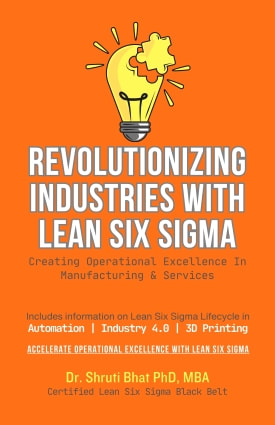
  • Revolutionizing Industries with Lean Six Sigma
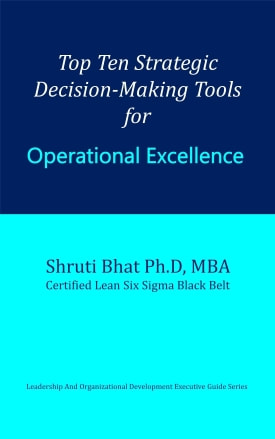
  • Top ten strategic decision-making tools for operational excellence
 
The Role of Lean Six Sigma in the Packaging Industry
The packaging industry faces numerous challenges, such as fluctuating raw material costs, rising customer expectations, environmental concerns, the need for faster production times etc. Lean Six Sigma helps businesses address these challenges by introducing efficiency-driven improvements. I have discussed few prime areas where Lean Six Sigma can minimize or eliminate the pain issues faced by the packaging industries-

1. Waste Reduction
Packaging operations often experience several types of waste, including excess material usage, overproduction, defects, waiting time, and inefficient movement of materials. Lean Six Sigma helps in identifying and eliminating these wastes, leading to cost savings and a more sustainable production process.

A packaging company producing corrugated boxes applied Lean Six Sigma tools to analyze excessive material waste in its cutting process. By optimizing cutting patterns and improving machine calibration, the company reduced material waste by 15%, leading to significant cost savings.

2. Process Optimization and Efficiency Enhancement
Lean Six Sigma focuses on eliminating ‘non-value-added’ activities and streamlining workflow. This leads to faster production cycles and reduced lead times.

A plastic packaging manufacturer experienced frequent bottlenecks in its sealing and labeling processes. Using value stream mapping (VSM) and Kaizen events, the company identified redundant steps and implemented automation, thus reducing cycle times by 30%.

3. Quality Improvement and Defect Reduction
Quality implies both process as well as product quality. Process deviations often lead to product defects. While Lean can improve process/ product quality to a fair extent, it is the Six Sigma methodology that has the full potential to eliminate variations and improve quality.

Six Sigma's goal is to achieve near-perfect quality by reducing process variations and minimizing defects. In packaging, defects such as misprints, incorrect labeling, and poor sealing can lead to product recalls and customer dissatisfaction.

A pharmaceutical packaging company faced a 3% defect rate in labeling, leading to regulatory non-compliance. By implementing Statistical Process Control (SPC), conducting root cause analysis and applying Lean Six Sigma principles, the company was able to reduce defects to 0.5%, improving compliance and customer satisfaction.

4. Cost Savings and Increased Profitability
Reducing waste, improving process efficiency, and minimizing defects directly translate to cost savings and higher profitability. By improving production accuracy, companies can reduce rework and scrap costs.

A beverage packaging firm implemented a Lean Six Sigma project focused on reducing energy consumption. By optimizing machine run times and using predictive maintenance techniques, they reduced energy costs by 20%, saving thousands of dollars annually.

5. Enhancing Supply Chain and Inventory Management
Lean principles emphasize just-in-time (JIT) inventory management and Kanban, ensuring that packaging materials and finished products are available exactly when needed, reducing storage costs and excess inventory.

A packaging supplier serving the e-commerce sector streamlined its supply chain by implementing a Kanban system, reducing lead times by 40% and eliminating overstocking issues.

6. Sustainability and Environmental Impact
Sustainability is a growing concern in the packaging industry, with increasing demand for eco-friendly and recyclable materials. Lean Six Sigma helps companies transition towards circularity and more sustainable practices by reducing waste, optimizing material usage, and improving energy efficiency.

  • The Power of Circular Economy is a Game Changer for Enhancing Operational Excellence.
  • Five key principles to sustaining operational excellence on a day-to-day basis.

A food packaging company used Design of Experiments (DOE) to test and optimize biodegradable packaging solutions. They successfully reduced plastic usage by 25% while maintaining durability and functionality.

Overcoming Challenges in Lean Six Sigma Adoption:
While Lean Six Sigma practices offer numerous benefits, it is not an easy fete to achieve. Companies in the packaging industry must overcome several small and big challenges to get the best outcomes. These challenges differ based on company size, culture, product portfolio, etc. However, some of the challenges are common and must be dealt with by any company (regardless of industry sector) planning to go for Lean Six Sigma implementation.

Here are top three challenges to overcome while implementing Lean Six Sigma:

1. Resistance to Change – Employees and few stakeholders may resist new methodologies. Dealing effectively with employee resistance is key for success with Lean Six Sigma.
Solution: Use effective change management model to lead/ manage change. There are over a dozen time-tested change management models to choose from. Checkout this video playlist to know more about change models. Select a model best suited for your organization.

Next, provide training and communicate the benefits clearly to all employees and stakeholders.

2. Initial Investment Costs – Implementing Lean Six Sigma requires investment in training, software, project management, running Kaizen events, process reengineering etc.
Solution: Focus on long-term cost savings and ROI.

3. Data-Driven Culture
– Implementing Lean Six Sigma requires a shift towards data-driven decision-making.
Solution: Encourage data collection, analysis and bring-on a culture of continuous improvement.

Conclusion: The Future of Lean Six Sigma in Packaging
The packaging industry is at a crossroads, with increasing demand for efficiency, sustainability and quality. Lean Six Sigma provides a proven framework to drive continuous improvement, cost reduction and customer satisfaction. Companies that successfully integrate Lean Six Sigma principles into their work culture can achieve operational excellence, gain a competitive edge and meet evolving market demands.

As technology advances, the combination of Lean Six Sigma with AI, automation, and IoT will further revolutionize the industry, making production smarter, more efficient, and more sustainable.

The time to embrace Lean Six Sigma is now!
  • Operational excellence success stories
  • How do you measure success of operational excellence?
 
Take the Next Step Towards Operational Excellence
The packaging industry is evolving rapidly, and companies that embrace Lean Six Sigma are positioning themselves for long-term success. From reducing waste and improving efficiency to ensuring sustainability and enhancing customer satisfaction, the benefits of Lean Six Sigma are clear.

However, successful implementation requires the right expertise, strategy, and a culture of continuous improvement. That’s where we come in.
  • Customized Lean Six Sigma Consulting – Gain expert insights to tailor Lean Six Sigma to your unique operational challenges.
  • Specialized Training Programs – Equip your teams with hands-on knowledge to drive measurable improvements.
  • End-to-End Implementation Support – Navigate challenges like change resistance, investment optimization, and data-driven decision-making.

Let’s transform your packaging operations together! Contact us today to explore how Lean Six Sigma can create a lasting impact on your business.

Schedule a Consultation | Connect with Us | Explore More Success Stories

The future of packaging belongs to those who innovate—start your Lean Six Sigma journey now!

Get in Touch
Checkout Operational Excellence Case Studies at: https://www.drshrutibhat.com/blog/category/case-studies

Keywords and Tags:
#LeanSixSigma #PackagingInnovation #OperationalExcellence #ProcessOptimization #SustainablePackaging #Circularity #BusinessConsulting

Categories:  Lean Six Sigma | Packaging industry | Operational Excellence 

​Follow Shruti on Twitter, YouTube, LinkedIn

​​​Subscribe to Operational Excellence Academy YouTube channel:

Picture
0 Comments

Reducing Packaging Defects in the Packaging Industry with TQM

1/6/2025

0 Comments

 
Spotlight: Are Packaging Defects Costing You Money & Reputation? Learn how Total Quality Management (TQM) helped one company cut defects by 35%, increase efficiency by 20% and reduce material waste by 25%. By focusing on real-time quality monitoring and empowering employees, they achieved remarkable results!
Don’t let packaging defects hurt your bottom line! Read full story below…
Reducing Packaging Defects in the Packaging Industry with TQM
Reducing Packaging Defects in the Packaging Industry with TQM- A Success Story

A packaging company was grappling with high defect rates on its production lines, which led to considerable material wastage and frequent delays in product delivery. This not only affected their profitability but also risked their reputation with clients who depended on timely, defect-free packaging for their own production needs. Determined to turn things around, the company decided to implement a Total Quality Management (TQM) program in their organization, with an objective to streamline operations, reduce waste and improve product quality.

The TQM approach began with establishing quality checkpoints at each stage of the packaging process. These checkpoints ensured that errors could be detected early before they compounded into more significant issues. Employees were trained intensively on quality standards, empowering them to take ownership of the process and recognize quality issues firsthand. Alongside the human element, statistical process control (SPC) tools were introduced, enabling real-time monitoring of performance metrics. The SPC system provided live data on key parameters, allowing the operational excellence taskforce to spot variations immediately and take corrective action before they could lead to defects.

The results of this comprehensive approach were remarkable!

Within months, the company saw a 35% reduction in packaging defects, directly addressing their initial quality concerns. This improvement did more than just reduce rejections; it streamlined the entire production line, leading to a 20% increase in packaging line efficiency.

Also, with fewer errors and smoother operations, the company could meet client deadlines more consistently and avoid the bottlenecks that had previously led to costly delays. Furthermore, material waste—a significant contributor to overhead costs—dropped by 25%, yielding substantial savings and contributing to a more sustainable operation.

The success of TQM in this case demonstrated that quality management goes beyond technical fixes; it requires a holistic approach involving employee engagement, proactive monitoring and a commitment to continuous improvement. This success story highlights the transformative potential of TQM in the packaging industry, where efficiency and quality are essential for maintaining competitiveness in a demanding market.

By making quality everyone’s responsibility and leveraging real-time data, the company didn’t just solve its immediate challenges; it established a foundation for long-term operational excellence.

Take Action to Transform Your Operations!
Are you ready to reduce defects, cut waste, and boost efficiency in your packaging processes? This success story is just the beginning!

Partner with us to:
  • Implement proven Total Quality Management (TQM) strategies tailored to your needs.
  • Train your team to achieve new levels of quality and ownership.
  • Leverage cutting-edge tools like Statistical Process Control for real-time results.

​Don't let defects drain your profitability or harm your reputation. Contact us today for a consultation or customized training session and discover how you can replicate these results in your organization. Together, let’s build a path to operational excellence and lasting success!
Get in Touch
More Operational Excellence Case Studies at: https://www.drshrutibhat.com/blog/category/case-studies

Keywords and Tags:
#TotalQualityManagement #PackagingIndustry #QualityControl #ProcessImprovement #StatisticalProcessControl #SPC #ReduceDefects #EfficiencyBoost #MaterialWasteReduction #EmployeeTraining #OperationalExcellence #ContinuousImprovement #PackagingSuccess #QualityStandards #ManufacturingExcellence #Packaging #QualityManagement #TQM #LeanManufacturing #SupplyChain  #QualityAssurance #DefectPrevention #Sustainability #BusinessEfficiency
​

Categories:  Case Studies | Packaging Industry | Operational Excellence 

​Follow Shruti on Twitter, YouTube, LinkedIn

​​Subscribe to Operational Excellence Academy YouTube channel:

operational excellence academy canada
0 Comments

Boosting Packaging Efficiency Through Automation

12/25/2024

0 Comments

 
Spotlight: Struggling with delays in packaging?
See how one company boosted packaging speed by 35% and reduced errors by 25% with automation. Transform your operations today!
Checkout full story below...
Boosting Packaging Efficiency Through Automation
Boosting Packaging Efficiency Through Automation: A Success Story

A packaging company was struggling with inconsistent output and frequent delays due to its manual, labor-intensive processes. This variability in production led to unreliable delivery schedules, impacting client satisfaction and limiting the company’s ability to compete in a fast-paced industry. After conducting a preliminary audit, the need for a solution became clear: they required a more efficient, reliable process that could deliver consistent results while meeting the demands of their growing client base.

The solution was to introduce automation into key areas of the packaging line. By automating repetitive and error-prone tasks, the company aimed to reduce human error and significantly speed up production. Automation was implemented in stages, targeting high-impact areas first. These included precision-driven tasks such as labeling, filling, and sealing. The automated systems were designed to maintain consistency and quality across all units, eliminating variations that had previously plagued the manual processes.

The results were transformative. Packaging speed increased by 35%, allowing the company to fulfill orders faster and reduce lead times. With automation minimizing human error, packaging errors dropped by 25%, improving product quality and consistency. This newfound efficiency also meant that clients benefited from a faster time-to-market, enhancing their satisfaction and loyalty to the company. The streamlined process not only met client expectations but also positioned the company as a reliable and agile partner in the packaging industry.

This success story illustrates the power of automation in transforming operational efficiency. By embracing technology, the packaging company didn’t just reduce errors and speed up production; it redefined its competitive edge, meeting market demands with precision and reliability. Automation proved to be a game-changer, highlighting its essential role for any packaging company aiming to stay ahead in a rapidly evolving market.

Ready to transform your packaging operations? Discover how automation can reduce errors, speed up production, and give your business a competitive edge.

Don’t wait—take the first step toward operational excellence today! Contact Us for a Free Preliminary Consultation
Get in Touch
More Operational Excellence Case Studies at: https://www.drshrutibhat.com/blog/category/case-studies

Keywords and Tags:
#OperationalExcellence #PackagingIndustry  #ManufacturingInnovation #PackagingAutomation  #ReduceErrors #TimeToMarket #PackagingIndustry #ProductivityBoost #AutomationInPackaging #CompetitiveAdvantage  #Industry40 #Efficiency #IncreaseEfficiency #StreamlineProcesses #PackagingInnovation #ErrorReduction #FastDelivery #PackagingSuccess 

Categories:  Case Studies | Packaging | Operational Excellence 

​Follow Shruti on Twitter, YouTube, LinkedIn

​Subscribe to Operational Excellence Academy YouTube channel:

Picture
0 Comments

Operational Excellence in Sustainable Packaging: Balancing Innovation and Brand Identity.

9/12/2024

0 Comments

 
Yesterday, I read an article that mentioned a popular beverage will now be available in green tinted plastic bottles (ref. https://www.packagingdigest.com/sustainability/7up-screwed-up-by-going-green).

This is in contrast to best practices which recommend that beverages be packaged in a clear PET bottle because it will make bottles easier to recycle. However, such a shift also presents a challenge in maintaining brand identity. Operational excellence can bridge this gap, ensuring that sustainability efforts enhance rather than compromise the brand.

Disclaimer: I cannot say why the beverage (referred in the above article) is allegedly being offered in tinted bottles, because I do not have any official statement from the makers. But as an operational excellence expert, I am giving my perspective and insights on how any company can embrace change to sustainable packaging.  

Here are five fronts to focus on:

1. Sustainability as a Strategic Priority
Embracing eco-friendly packaging material and adopting circular economy principles is no longer optional; it’s a strategic priority for businesses aiming for long-term success. Hence, companies must embed ‘sustainability’ as a default into their operational excellence frameworks, ensuring it drives both innovation and competitive advantage.

Check out: The power of circular economy is a game changer for enhancing operational excellence.

2. Product Integrity:
The need for a color tint in the PET bottles may not always be for cosmetic reasons. As a seasoned formulation scientist (in my previous work life) I can confidently say that, if the product composition is sensitive to UV rays, then packing them in tinted brown or blue bottles will maintain its integrity. Otherwise, the product can degrade and will have to get recalled from the market, which will adversely impact customers, profitability and brand reputation.

Therefore, replacing tinted to clear for primary packing of products is a big decision.

So, to make the go/no-go decision, first test your product for its stability to sunlight and heat. If product meets shelf-life specifications, then all is well to go for the change. If not, you have a huge challenge in your hands, that of- Reformulating your product without changing its sensory appeal! In such a scenario use statistical experimental designs aka DOE (design of experiments) to conduct trials and stratified sampling for testing, to get maximum data with minimal lab work. Check out: What is DOE? and What is Stratified sampling? Combining DOE with stratified sampling, is a sure formula for reformulating any product in the fast lane.

3. Brand Identity and Consumer Perception
While the bottle’s new color may affect consumer recognition, this presents an opportunity for brand innovation. By effectively communicating the sustainability benefits and reinforcing the message through marketing campaigns, companies can turn potential brand confusion into a strong value proposition. Leveraging data-driven insights from customer feedback can help fine-tune the balance between your sustainability goals and brand identity.

4. Continuous Improvement and Cross-functional Collaboration
Cross-functional teams, including marketing, R&D, and supply chain, must work collaboratively to ensure this packaging shift aligns with both operational and branding goals. Continuous improvement principles such as- Kaizen, TRIZ, Agile, Hoshin, Scrum, can help evaluate consumer response and make iterative adjustments, whether through packaging design tweaks, enhanced marketing, or material optimization.

5. Leveraging Technology for Sustainability
Adopting digital transformation tools, such as lifecycle assessment software, can optimize material selection and evaluate the environmental impact in real- time. This allows companies to make data-driven decisions that balance sustainability with operational efficiency and brand preservation.
​
To summarize, operational excellence in sustainable packaging is about balancing innovation with brand equity. By embedding sustainability into core operations, engaging consumers through clear communication, and continuously improving, your company can lead in both environmental responsibility and brand strength.
 
Keywords and Hashtags:
#OperationalExcellence #SustainablePackaging #EcoFriendlyPackaging #BrandIdentity #PackagingInnovation #CircularEconomy #SustainabilityInBusiness #PackagingSustainability #PETBottles #RecyclingInnovation #GreenPackaging #ProductIntegrity #PackagingDesign #ConsumerPerception #ContinuousImprovement #DOE #DigitalTransformation #PackagingTrends #KaizenInPackaging #SustainableBranding #PackagingOptimization #LifecycleAssessment #R&DInnovation #CrossFunctionalCollaboration #BrandSustainability

​Categories:  Insights | Packaging | Operational Excellence

Follow Shruti on Twitter, YouTube, LinkedIn
Get in Touch
0 Comments

How to Improve Operational Excellence in the Packaging Industry

10/20/2022

0 Comments

 
how to improve operational excellence in the packaging industry
​When a company strives to achieve operational excellence, every employee in the company can see the value flowing from the business to the customer.

It is a collaborative effort that involves cutting costs, increasing productivity, and cultivating a corporate culture to improve the quality of products and services and reach success. There are many benefits to improving operational excellence (OpEx) in packaging, and these benefits can be realized with the right tools and methods. This post will examine some of these benefits.

Advanced automation technologies can help CPGs (consumer packaged goods) increase overall equipment effectiveness, limiting variability in process streams, materials, machine setup, and utilities. Increasing overall equipment effectiveness (OEE) can help CPGs better respond to consumer demand and avoid operational losses. OpEx improves efficiency of processes needed by OEMs (original equipment manufacturer) and other manufacturers to offer industry-leading products that delight customers. By focusing on these areas, CPGs can enhance their competitive position and improve profitability.
​
Technology is an essential part of the process of operational excellence. Dedicated software provides tools for value stream mapping and cross-functional flow charts. Project management tools enable companies to implement appropriate methodologies. A data-analysis tool can predict future trends. This information allows companies to make more accurate decisions and achieve operational excellence faster. When a company adopts a data-driven strategy, it becomes easier to measure improvements and make better decisions. For more about operational excellence, checkout Top Ten Strategic Decision-Making Tools for Operational Excellence

Related Reading:
  1. Kaizen for pharmaceutical, medical device and biotech industries
  2. How to cut costs strategically using Kaizen
  3. Streamline processes and workflows with Gemba Walk.
  4. Top Ten Strategic Decision-Making Tools for Operational Excellence

Follow Shruti on Twitter, Facebook, YouTube, LinkedIn

Categories:  Packaging | Operational Excellence

Keywords and Tags:
#operationalexcellence #operationalexcellenceforpackagingindustry #strategicdecisionmaking #strategy  #strategymanagement #decisiontools #decisionmaking #strategicplanning  #challengesofdecisionmaking 
Get In Touch
0 Comments
<<Previous

    New Book Released!

    Revolutionizing Industries with Lean Six Sigma

    Shruti's YouTube Channel ...

    Picture

    Blog Categories

    All
    3D Printing
    Agile
    Artificial Intelligence
    Automation
    Biotechnology
    Books
    Business Continuity
    Business Turnaround
    Case Studies
    Change Management
    Checklists
    Chemical Industry
    Continuous Improvement
    Design Thinking
    Digitalization
    Drug Delivery
    External News Links
    Hall Of Fame
    Healthcare
    Hoshin Kanri
    HR Development
    Innovation
    Insights
    ISO
    Just In Time
    Kaizen
    Leadership
    LEAN
    Lean Six Sigma
    Life Sciences
    Machine Learning
    Manufacturing
    Medical Devices
    Mistake Proofing
    Motivational Cards
    MSMEs
    Nanotechnology
    Operational Excellence
    Packaging
    Patents
    Personal Products
    Process Improvement
    Product Development
    Productivity Increase
    QbD
    Quality Management
    R&D Leadership
    Robotics
    Service Industry
    Six Sigma
    Strategy
    Supply Chain Logistics
    Telecom Industry
    Templates
    TQM
    Videos
    Voice Of Customer
    Whitepaper
    Workshops

    Shruti's books...

    Picture
    top ten strategic decision-making tools for operational excellence
    shruti bhat, business process management, continuous improvement
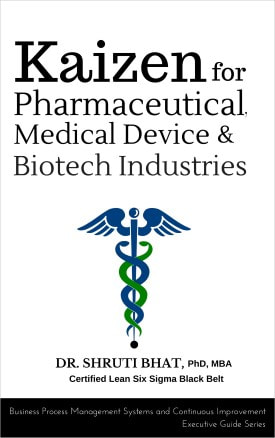
    kaizen for pharmaceutcials, medical devices and biotech industry book by Dr Shruti Bhat
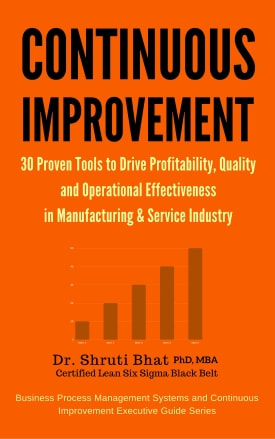
    Book on Continuous improvement tools by Dr Shruti Bhat
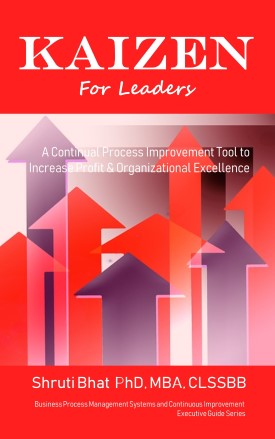
    kaizen for leaders, continuous process improvement tool to increase profit and organizational excellence by shruti bhat
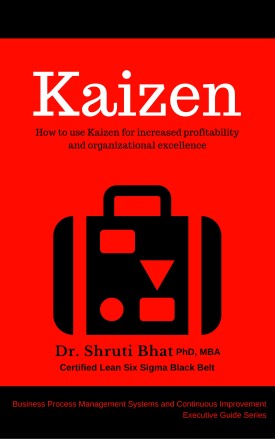
    kaizen, shruti bhat, continuous improvement, quality, operations management
    how to lead a successful business transformation
    leading organizations through crisis
    emotional intelligence
    how to overcome challenges of creating effective teams
    modular kaizen Vs Blitz kaizen
    How to increase employee engagement as a new boss

Connect with Dr. Shruti Bhat at- ​YouTube, LinkedIn​ and X

© Copyright 1992- 2025 Dr. Shruti Bhat ALL RIGHTS RESERVED.
See Terms and Conditions for details on this site usage.
Subscribe to Operational Excellence Academy YouTube Channel
​Subscribe to Operational Excellence Academy YouTube Channel
SHRUTI BHAT, CONTACT
Click to connect.
Created by Macro2Micro Media