Shruti Bhat PhD, MBA, Operations Excellence Expert
  • Home
  • Shruti
  • Operational Excellence Hub
  • OpEx Models
  • Writings
    • Process Improvement
    • Business Transformation
    • Innovation Management
    • Leading Research and Development
    • Developer's Diary
    • Business Continuity
    • Change Management
    • Digital Transformation
    • Quality Improvement and Compliance
    • Free eBooks and Whitepapers
    • Checklists and Templates
  • Books
  • Services
    • PharmaOps Consulting
    • Tara LeanWorks
    • Training Services
  • Blog
  • Insights
  • Case Studies
  • Patents
  • Print Publications
  • Videos
  • Contact

Frequently asked questions on Continuous Improvement: FAQ 6: What are substantial and effective changes in ISO 9001:2015 and how will it impact our organization?

5/17/2021

0 Comments

 
This multi-part blog post series presents practical answers to frequently asked questions on improving business entities. 
frequently asked questions on continuous improvement FAQ 6- What are substantial and effective changes in ISO 9001:2015 and how will it impact our organization?
Its objective is to assist business leaders in these trying times, whether they are learning the basics of continuous improvement, planning their first business improvement project, or evangelizing process-oriented thinking throughout their organization.

We are in year 2021, yet, for the benefit of professionals who have just recently started out on business process improvement journey, I have included this FAQ on ISO 9001:2015.

Note: ISO 9001 is usually updated every five years. It was last updated in September 2015, hence it's referred to as ISO 9001: 2015. Therefore, until further update is announced, ISO 9001: 2015 is the current ISO 9001 standard.
​
So let’s get started…

​FAQ 6- What are substantial and effective changes in ISO 9001:2015 and how will it impact our organization?

​The ISO 9001:2015 features two important changes, both in content and structure.
 
Firstly, ISO 9001:2015 describes more about processes (especially ‘non-conforming’ processes), process ownership and accountability. A clear definition of process enables better monitoring; better analysis and improvement actions tend to be more effective.
 
Although, this will require organizations to monitor processes and evaluate when they are non-conformant to specifications or user needs. This will also require (as appropriate) an investigation into the causes and taking action to prevent recurrence of the detected problems. Alternately, ISO 9001:2015 brings forth stringent supplier quality control.
 
Secondly, it puts ‘risk management’ as one of the focal points of organization’s attention. This is blessing to organizations in aerospace - that currently need to be AS9100 compliant and use the CMMI as a model for process improvement. The ISO-based standards are catching up with the ‘process’ focus that has always been integral to CMMI adoption.
 
ISO 9001:2015 is a positive move and smart organizations will be able to better leverage their investments in both ISO and the CMMI. Integration among all standards is one of many reasons for ISO revision.
 
ISO 9001:2015 prescribes risk-based management techniques and emphasizes on preventive actions. It not only works to assess risk to the company and to its customer, it also attempts to be supportive of service industries, office environments, virtual offices that have found ISO standard difficult to implement in the past.

You can read more about ISO methodology, advantages of ISO and limitations of ISO here.
 
I shall discuss more FAQs concerning effective & efficient business process improvement in upcoming parts of this blog post series. If you have any such questions about business process design or continuous improvement, please feel free to drop it in the comment section below.
 
By the way, if you run a company that is facing a challenge to thrive in these difficult times, I would suggest that you please revisit your business processes in order to accelerate growth and bring a quick turnaround.
Get In Touch
Follow Shruti on Twitter, Facebook, YouTube, LinkedIn

Related reading:

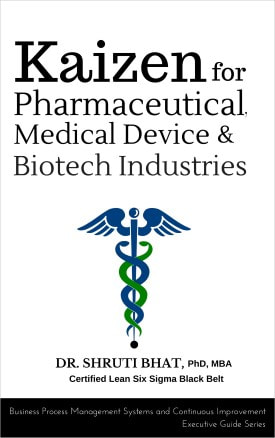
  1. Kaizen for pharmaceutical, medical device and biotech industries.
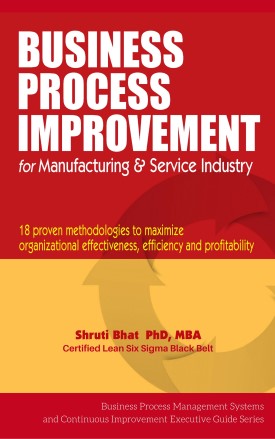
  2. Business process improvement techniques for manufacturing and service industries.
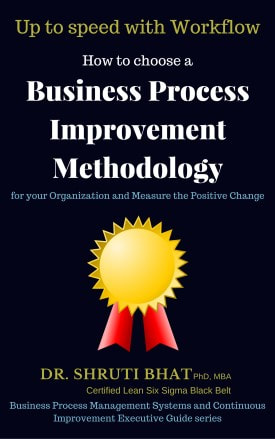
  3. How to choose a business process improvement technique for your organization.
  4. 30 Popular continuous improvement tools.
Keywords and Tags-
 
#businessprocessimprovement #iso #processefficiency #businessprocessmodification #processimprovement #continuousimprovement
0 Comments

Frequently asked questions on Continuous Improvement: FAQ 5: Are there any points to watch out before selecting ISO methodology for a company?

5/14/2021

0 Comments

 
This multi-part blog article presents practical answers to frequently asked questions on improving business entities. 
frequently asked questions on continuous improvement FAQ 5- are there any points to watchout before selecting ISO methodology for a company
Its objective is to assist business leaders in these trying times, whether they are learning the basics of continuous improvement, planning their first business improvement project, or evangelizing process-oriented thinking throughout their organization.
​
So let’s get started…

FAQ 5 - ISO is known to be excellent within chemical and engineering industries. However, are there any points we should watch out for, before selecting ISO methodology for our company?

The ISO approach is vital for businesses and organizations to strive and develop a good reputation, as well as, to excel in future aspirations of the company. However, there are some limitations, which can make it difficult to use ISO approach for quality management and continuous improvement.
 
One of the limitations with the ISO for quality is that it does not have much weight when it comes to an individual’s performance in a company. Individuals are not required to be responsible for their unique contributions since, the company’s effectiveness is viewed as a whole. It can often be quite motivating and more effective for a company to allow individuals to take responsibility for their contributions.
 
This also helps increase employee self-esteem and integrity, which can make them work harder for the company and produce effective results. Another way in which individual assessment is beneficial is that it encourages interest and concern within the company. Therefore, one needs to take appropriate steps in order to maintain employee morale during and after implementation of ISO.
 
Since individual contributions are not monitored closely, ISO can also take a lot of time to find the root cause, should a problem occur.
 
Secondly, ISO approach can waste a lot of money. ISO often encourages companies to scrap any defaults or defective produce altogether. This is fine if all produce is perfect, but it is quite common to have few of products that are defective and not the whole lot.
 
In addition, this is very subjective as ‘defects’ can also be classified as- critical, major, minor etc.
 
Moreover, it is industry based. For e.g. in pharmaceutical industry, even a minor product defect is not acceptable since it would potentially compromise safety and/or efficacy to the patient. While, in a packaged food industry, dented cans (containing quality product) is many a times classified as ‘minor’ defect, not scrapped, and instead sold at a discounted price.
 
If the goal of the company is to be ‘defect-free’ or supplying only ‘high quality’ products, then ISO can end up costing the company quite a big chunk of money, in case of product/service defects. Strategic financial planning, considering this ‘all or none’ aspect, becomes vital before selecting ISO methodology for your organization.
 
ISO approach relies almost completely on presenting documentation that depict the system’s various procedures, which can be very time consuming and cause a company to loose focus of their business goals in the meantime.
 
Since those running/ managing/ leading the company, are in charge of arranging the documentation, the time spent gathering this information can take away their contributions to their routine job during that time. Companies therefore need to be up to date with their human resource planning prior to embarking on ISO journey.

You can read more about ISO methodology, advantages of ISO and limitations of ISO here.

I shall discuss more FAQs concerning effective & efficient business process improvement in upcoming parts of this blog post series. 
If you have any such questions about business process design or continuous improvement, please feel free to drop it in the comment section below.
 
By the way, if you run a company that is facing a challenge to thrive in these difficult times, I would suggest that you please revisit your business processes in order to accelerate growth and bring a quick turnaround.
Get In Touch
Follow Shruti on Twitter, Facebook, YouTube, LinkedIn

Related reading:

  1. Kaizen for pharmaceutical, medical device and biotech industries.
  2. Business process improvement techniques for manufacturing and service industries.
  3. How to choose a business process improvement technique for your organization.
  4. 30 Popular continuous improvement tools.
Keywords and Tags:

#businessprocessimprovement #continuousimprovement #ISO #qualitymanagement #businessprocessmodification #businessprocessreengineering  #processimprovement  

0 Comments

Frequently asked questions on Continuous Improvement: FAQ 4: What are few limitations of CMMI methodology?

5/12/2021

0 Comments

 
This multi-part blog post series presents practical answers to frequently asked questions on improving business entities. 
frequently asked questions on continuous improvement FAQ 4- what are few limitations of CMMI methodology
Its objective is to assist business leaders in these trying times, whether they are learning the basics of business process improvement, planning their first business improvement project, or evangelizing process-oriented thinking throughout their organization.
​
So let’s get started…

FAQ 4- We understand Capability Maturity Model Integration (CMMI) is one of the most common business process improvement methodology within the IT industry. Are there any limitations of CMMI you could highlight?

​CMMI or Capability Maturity Model Integration is indeed, one of the most popular business improvement methodology within the IT sector, also within the aerospace industry.
 
CMMI has many advantages when it comes to implementing the methodology to an organization, whether in the organization’s entirety or in departments. However, there are some limitations worth noting before incorporating this methodology.
 
CMMI is not exactly designed to suit every organization. There are times when using CMMI will not enhance existing performances, due to the strict documentation requirements that are necessary to implement this methodology. This is unachievable for many companies, especially of smaller size.
 
In addition, CMMI requires a detailed process that lists all the stages. It is better for bigger businesses to use CMMI than smaller ones since, smaller businesses often do not have the adequate resources or data to fulfill the requirements of CMMI methodology.
 
CMMI methodology demands a large amount of effort and time to put the changes into action. It also requires a significant shift in the mindset and philosophy of the organization, which can be quite stressful and overwhelming if the introduction of the ideas of CMMI is not successful.
 
Moreover, a business’s work culture can change drastically by implementing strict administration of CMMI. This can lower the feeling of independence and creativity amongst employees or developers.
 
Further, the models used in CMMI are not processes in their own right and do not offer the expected descriptions. Organizations have a right to choose the processes depending on the factors that are important to the business and it can be difficult for organizations to choose the best method. Despite being easy to understand, the various techniques used by CMMI can actually be difficult to implement.
 
Yet another reason CMMI can be limiting to a company is because, it draws the focus of the organization to reaching each level as a ‘goal’. Therefore, each minor goal is constantly being pursued and efforts get drawn away from the bigger picture i.e. business process improvement itself.
 
Moreover, using CMMI does not mean that success will definitely be achieved, since each organization needs to adapt the various stages in order to fulfill their own unique needs.
 
I shall discuss more FAQs concerning effective & efficient business process improvement in upcoming parts of this blog post series. If you have any such questions about business process design or continuous improvement, please feel free to drop it in the comment section below.
 
By the way, if you run a company that is facing a challenge to thrive in these difficult times, I would suggest that you please revisit your business processes in order to accelerate growth and bring a quick turnaround.
Get In Touch
Follow Shruti on Twitter, Facebook, YouTube, LinkedIn

Related reading:

  1. Kaizen for pharmaceutical, medical device and biotech industries.
  2. Business process improvement techniques for manufacturing and service industries.
  3. How to choose a business process improvement technique for your organization.
  4. 30 Popular continuous improvement tools.
Keywords and Tags-
 
#businessprocessimprovement #ebusinessprocessimprovement #cmmi  #businessprocessmodification #processimprovement #continuousimprovementfor IT
0 Comments

Frequently asked questions on Continuous Improvement: FAQ 3: Continuous Improvement for e-business

5/11/2021

0 Comments

 
This multi-part blog article presents practical answers to frequently asked questions on improving business entities. ​
frequently asked questions on continuous improvement FAQ 3- continuous improvement for e-business
Its objective is to assist business leaders in these trying times, whether they are learning the basics of continuous improvement, planning their first business improvement project, or evangelizing process-oriented thinking throughout their organization.

So, let’s get started … 

FAQ 3- Could you please throw some light on continuous improvement for e-business?

It is no secret that the internet plays a vital role in many businesses. Business interactions become quicker, easier through the internet and allow handling of business relationships/ transactions in many ways.
 
E-business describes the combination of an organization’s informative and communicative tools, technologies, otherwise known as “business software”. It allows for the improvement of processes by creating more value to the organization, clients and associates.
 
E-business process improvement is not only applicable to companies that exists virtually, but it can be applied to all types of businesses that use IT or work with digital products. The desired result of e-business process improvement is to complete processes in a quicker manner, while spending less funds and adding value to the company.
 
E-business process improvement is a vital part of e-continuous improvement program.
 
E- business process improvement enhances the workflow in a company effectively and efficiently. Also, it allows large and fast changes to take place which are essential for e-businesses, since they are always changing and expanding. Organizations must integrate their e-business processes with best-in-class process improvement methodologies in order to reach their goals.
 
The outcome of adopting e-business process improvement program in an organization is to generate value. Often, creating value brings forth an increase in employee motivation, customer satisfaction, a rise in profit margins and favored affiliations with associates.
 
E-business process improvement campaigns also aim to lower the mistakes caused by individuals because of misunderstandings or miscommunications, while motivating employees.
 
It is a common belief that executing e-business process improvement requires high-level technology. While high-level technology can help, it is definitely not the only way that implementation can and will take place.
 
E-business process improvement requires both the IT and managerial departments to work together in order to come up with decisive ways in which, e-business processes of the organization are made to work more efficiently and effectively.
 
Some of the proven e-business process improvement methodologies are Lean, CMMI, Hoshin, Scrum, Agile, Kanban etc.
 
Be it a brick and mortar workplace or an e-business, both need to stay in business to sustain and grow. The problems faced by brick & mortar and e- businesses are not same, but there are quite a few ‘similar’ problems. Therefore, e- continuous improvement methodologies must be appropriately selected, enforced, monitored and continued for business efficiency, sustained growth and consistent increasing profits.
​
I shall discuss more FAQs concerning effective & efficient business process improvement in the upcoming posts. If you have any such questions about business process design or continuous improvement, please feel free to drop it in the comment section below.
 
By the way, if you run a company that is facing a challenge to thrive in these difficult times, I would suggest that you please revisit your business processes in order to accelerate growth and bring a quick turnaround.
Get In Touch
Follow Shruti on Twitter, YouTube, LinkedIn

Related reading:

  1. Kaizen for pharmaceutical, medical device and biotech industries.
  2. Business process improvement techniques for manufacturing and service industries.
  3. How to choose a business process improvement technique for your organization.
  4. 30 Popular continuous improvement tools.
Keywords and Tags-
 
#businessprocessimprovement #ebusinessprocessimprovement #cmmi  #businessprocessmodification #processimprovement #continuousimprovementfor IT #continuousimprovementforebusiness
0 Comments

Frequently asked questions on Continuous Improvement: FAQ 2: What are the different types of business process improvement/ business process re-engineering campaigns?

5/10/2021

0 Comments

 
This multi-part blog post series presents practical answers to frequently asked questions on improving business entities. 
frequently asked questions on continuous improvement FAQ 2- What are the different types of business process improvement / business process re-engineering campaigns?
Its objective is to assist business leaders in these trying times, whether they are learning the basics of continuous improvement, planning their first business improvement project, or evangelizing process-oriented thinking throughout their organization.
​
So let’s get started…

​FAQ 2: What are the different types of business process improvement / business process re-engineering campaigns?

Business process improvement or re-engineering campaigns are broadly classified as - Breakthrough, Streamlined and Continuous improvement.
 
Breakthrough Improvement is a methodology that incorporates vital improvements to the main areas of the business. It is a quicker and more intense method of improvement. It is common for breakthrough improvements to be conducted by a few employees whose purpose is to come up with a new method of problem-solving. It is common for long-lasting and continuous problems to be solved through Breakthrough improvement technique by dedicating time and effort into coming up with a solution for a designated time. Breakthrough improvement has large and obvious advances, but the results can also be extremely varied. A popular example of Breakthrough improvement is Six Sigma methodology.
 
Streamlined Improvement refers to the improvement of a process by reducing and shortening the number of steps in a process in order to lower its intricacy. It is beneficial since it helps cut back on costs, uses time more effectively and efficiently, as well as improves supervisory observance. A popular example of Streamlined improvement methodology is 5S.
 
Continuous Improvement focuses on undergoing constant improvements that take place over time. These increments allow for less disruption to the organization and allow individuals to perform necessary tasks on the agenda in steady and continual stages. Many organizations find that, performing small continual improvements has a profound effect in the long run. A popular example of Continuous improvement methodology is Lean.

Out of the three types of business process improvement, Continuous improvement is often preferred, since the small changes end up adding more 'value' than that of a Breakthrough improvement.

My recommendation is that organizations must invest time in Continuous-Breakthrough improvements (for example Lean Six Sigma) in order to truly excel. Continuous as well as Breakthrough improvement can have a better chance of working properly if-
​
  • Both data and facts are used.
  • Employees are involved and encouraged to find solutions.
  • Methods are established and duly implemented.
 
Both Breakthrough and Continuous improvement methods use PDCA (Plan-Do-Check-Act) sequence for successfully running the process improvement campaigns.
 
Organizations can benefit from using both Continuous and Breakthrough improvement methods. The use of either improvement method depends on the circumstances and the desired outcome. 

Another possibility is for organizations to perform a series of Breakthrough improvements that allow employees, to progressively make continual improvements in their everyday work life. Organizations that choose to implement this method often reach more desirable results than those that choose either Continuous or Breakthrough improvement.

Another important business improvement technique is Kaizen.

Kaizen is a Japanese technique of improvement. Translated, Kaizen means 'make better'. 

Note that, contrary to popular belief, Kaizen is not a type of Continuous improvement technique. Rather, Kaizen creates a culture of continuous improvement. Therefore, if you wish to initiate and sustain continuous improvement at your workplace, then start with Kaizen.

Kaizen is a business process improvement methodology in itself. Kaizen is also an effective change management technique. Therefore, if a company practices Kaizen alone (and doesn't go-in for any Breakthrough, Streamlined or Continuous improvement campaign), yet it will achieve efficient and effective workflows. 

​In fact, I would suggest that if a company doesn't wish to go for any formal process improvement technique due to whatever constraints, be it- limited resources, less number of employees, regulations etc., then go for Kaizen. 

Tip: As it requires minimal cost for implementation (while giving phenomenal returns), Kaizen is especially beneficial for startups.   
​
Moreover, Kaizen can be practiced both by individuals as well as corporates.

Further, Kaizen can be implemented in all types of organizations viz. manufacturing, services, educational institutes, government offices, non-profit associations etc. Kaizen implementation exhibits fastest returns in both big and small organizations (regardless of organization's culture or industry sector).


There are nine types of Kaizen. You can check more about Kaizen here.

Tip: Coupling Kaizen along with Continuous improvement technique such as Lean, augments rewards exponentially.

I shall discuss more FAQs concerning effective & efficient business process improvement in upcoming parts of this blog post series. If you have any such questions about business process design or continuous improvement, please feel free to drop it in the comment section below.

By the way, if you run a company that is facing a challenge to thrive in these difficult times, I would suggest that you please revisit your business processes in order to accelerate growth and bring a quick turnaround. ​

Note that there are over 18 different time-tested process improvement techniques. And one does need to wisely choose when, which and how to apply each of these improvement methodologies to their business.
Get In Touch
Follow Shruti on Twitter, Facebook, YouTube, LinkedIn

Related reading:

  1. Kaizen for pharmaceutical, medical device and biotech industries.
  2. Business process improvement techniques for manufacturing and service industries.
  3. How to choose a business process improvement technique for your organization.
  4. 30 Popular continuous improvement tools.
Keywords and Tags:
​
#businessprocessimprovement #businessprocessmodification #businessprocessreengineering #PDCAcycle #kaizen #processimprovement #breakthroughimprovement  #streamlinedprocessimprovement #continuousimprovement #kaizenforstartups

0 Comments

Frequently asked questions on Continuous Improvement: FAQ 1: What is the difference between Business Process Improvement (BPI) and Business Process Re-engineering (BPR)?

5/9/2021

0 Comments

 
This multi-part blog article presents practical answers to frequently asked questions on improving business entities. 
frequently asked questions on continuous improvement FAQ 1: What is the difference between Business Process Improvement (BPI) and Business Process Re-engineering (BPR)?
Its objective is to assist business leaders in these trying times, whether they are learning the basics of continuous improvement, planning their first business improvement project, or evangelizing process-oriented thinking throughout their organization.
 
A common question faced by me during my practice as a Continuous Improvement Expert is- What is the difference between Business Process Improvement and Business Process Re-engineering? I will answer this question (in FAQ 1), but this and many such common queries drove me towards writing this blog post series...
 
So, let us begin with the first FAQ …

FAQ 1: What is the difference between Business Process Improvement (BPI) and Business Process Re-engineering (BPR)?

A business process defines the various activities involved in achieving a particular goal. Business processes briefly describe the chain of events that are involved in an activity or a group of activities such as- running a business, manufacturing of products or selling products or services.
 
Business Process Improvement (BPI) and Business Process Re-engineering (BPR) are two widely used terms while attempting to modify business processes in order for organizations to sustain and grow.
 
As the name implies, both BPI and BPR deal with business process modification, however, they are two widely different terms. Allow me to ask few questions to explain these terms:

  • Is your process broken?
  • Does it have a high impact on your company’s strategic direction?
  • Is it antiquated?
  • Does it fall far below ‘best-in-class’ or desired ‘state-of-the-art’?
 
If your answer to the above questions is ‘Yes’, then its BPR, meaning- those said processes have to be re-engineered or re-designed.
 
BPR technique assumes that the current process is irrelevant, does not work and therefore needs overhauling completely from A to Zee.
 
For all those business processes that do not need re-engineering, but essentially need modification for benefiting the business, it is BPI - business process improvement.

I shall discuss more FAQs concerning effective & efficient business process improvement in upcoming blog articles. If you have any such questions about business process design or continuous improvement, please feel free to drop it in the comment section below.
 
By the way, if you run a company that is facing a challenge to thrive in these difficult times, I would suggest that you please revisit your business processes in order to accelerate growth and bring a quick turnaround.
Get In Touch
Follow Shruti on Twitter, Facebook, YouTube, LinkedIn

Related reading:

  1. Kaizen for pharmaceutical, medical device and biotech industries.
  2. Business process improvement techniques for manufacturing and service industries.
  3. How to choose a business process improvement technique for your organization.
  4. 30 Popular continuous improvement tools.
Keywords and Tags:
​
#businessprocessimprovement #businessprocessmodification #businessprocessreengineering #PDCAcycle #kaizen #processimprovement #breakthroughimprovement  #streamlinedprocessimprovement #continuousimprovement
0 Comments

Convert business deficiency to efficiency with Spaghetti Models

2/16/2021

0 Comments

 
​You are in queue, please wait!
convert business deficiency to efficiency with spaghetti models
Wait-times, hold-ups, bottlenecks, slowdowns, delays are common deficiencies at workplace. Want to get rid of them? Use Spaghetti models.

Spaghetti model is a method of viewing data to visualize processes in order to identify redundancies in workflows and increase business efficiency.
​
Spaghetti models are also known as Spaghetti diagram, Spaghetti charts or Spaghetti plots.

How do Spaghetti model work?

Spaghetti model maps the total path of a process and tracks movement of product, paper and people. This helps to identify areas of ‘waste’ and opportunities of process improvement. When an underlying process get streamlined, business efficiency increases immediately.

Since delays and deferral type of deficiencies are omnipresent, Spaghetti model may be used to improve all types of workplaces be it a manufacturing set-up, service sector, government office, educational institute, non-profit organization etc.
​
However, Spaghetti models are popularly used on production shop floors of manufacturing companies, healthcare, aviation, weather bureaus, meteorology, pharmaceuticals, supply chain logistic companies, retail, hospitality, financial institutions etc.

Examples of Spaghetti model in various sectors:

There are numerous examples of Spaghetti model implementations in manufacturing and service organizations. I have enumerated only few examples here.

Manufacturing sector-
In manufacturing sector, Spaghetti models are used to track routing of man- material movement at the shop floor. Say for example- calculating distance travelled by a forklift with the objective of improving speed with which materials are transported. 

Spaghetti models can be used in all types of manufacturing companies regardless of its size, vertical or product range. 
Process improvements resulting after Spaghetti model implementation in the manufacturing sector have resulted in a decrease of 30 to 35% overhead cost. Also, as much as 85% set-up time has been reduced.
Further, Spaghetti models are extremely beneficial in improving R&D efficiency too. For example- Spaghetti model plays a pivotal role in shortening drug product development timelines and bringing new products fast- to- market. 

Spaghetti models used in drug discovery and drug product development research speed-up phases 1,2 and 3 of new product development pathway. They also play a pivotal role in identifying drug interactions. Identification of differences in plasma-half lives of drugs in different population groups in a clinical trial can effectively be done using Spaghetti models.
 
Services sector-
In services sector and office areas, the administration departments benefit the most by implementing Spaghetti models.
Productivity rise of 35 to 40% has been noted in various service-based companies after Spaghetti model led process improvements.
In financial institutions, Spaghetti model can be used to improve customer service by decreasing wait-times to approve a mortgage loan.

Restaurant kitchen use Spaghetti models to improve chef’s efficiency to deliver on orders taken.

Package delivery and logistics companies use Spaghetti models to improve on-time delivery of letters and parcels.

Weather bureaus use Spaghetti models to study positions and intensities of pressure systems to forecast rainfall or snowstorm warnings.

Also, Spaghetti models are useful to study fish, animal and bird distribution and migration patterns.

Traditionally Spaghetti models are drawn using color pens on paper. However, now they can be done via digital means too. 

​Further, Spaghetti models are an integral component of business transformation and continuous improvement campaigns done via process stapling and Gemba walks. 
Because of its versatility of use and fast returns on implementation, Spaghetti model is amongst the top 25 important continuous improvement tools.

5 Signs your organizations must use Spaghetti model-

Here are five signs that indicate your organization needs to use Spaghetti model-
  1. Shorten scale-up time or the time taken to transfer technology know-how from R&D bench to commercial manufacturing.
  2. Reduce backorders.
  3. Planning a new layout or renovating your manufacturing facility or office premises.
  4. Improve your supply chain processes.
  5. Increase your business’s operating efficiency.

​The success of a Spaghetti model led process improvement is confirmed when the new process does not look like ‘spaghetti’ and the total distance of process path as well as operational time are reduced drastically.

Hence, make sure to include Spaghetti model at the time of strategy planning to achieve assured returns on your business transformation or continuous improvement projects. 
Get In Touch
Follow Shruti on Twitter, Facebook, YouTube, LinkedIn

Related reading:

  • Streamline processes and workflows with Gemba Walk
  • ​How to cut costs strategically using Kaizen
  • ​​Continuous Improvement- 30 Proven Tools to Drive Profitability, Quality and Operational Effectiveness in Manufacturing & Service Industry by Dr. Shruti Bhat
Keywords and Tags:
​#spaghettimodel #spaghettidiagram #spaghettichart #spaghettiplot #continuousimprovement #businessturnaroud
0 Comments
<<Previous
Forward>>

    New Book Released!

    Revolutionizing Industries with Lean Six Sigma

    Shruti's YouTube Channel ...

    Picture

    Blog Categories

    All
    3D Printing
    Agile
    Artificial Intelligence
    Automation
    Biotechnology
    Books
    Business Continuity
    Business Turnaround
    Case Studies
    Change Management
    Checklists
    Chemical Industry
    Continuous Improvement
    Design Thinking
    Digitalization
    Drug Delivery
    External News Links
    Hall Of Fame
    Healthcare
    Hoshin Kanri
    HR Development
    Innovation
    Insights
    ISO
    Just In Time
    Kaizen
    Leadership
    LEAN
    Lean Six Sigma
    Life Sciences
    Machine Learning
    Manufacturing
    Medical Devices & Prosthetics
    Mistake Proofing
    Motivational Cards
    MSMEs
    Nanotechnology
    Operational Excellence
    OpEx Models
    Packaging
    Patents
    Personal Products
    Process Improvement
    Product Development
    Productivity Increase
    QbD
    Quality Management
    R&D Leadership
    Robotics
    Service Industry
    Six Sigma
    Strategy
    Supply Chain Logistics
    Telecom Industry
    Templates
    TQM
    Videos
    Voice Of Customer
    Whitepaper
    Workshops

    Shruti's books...

    Picture
    top ten strategic decision-making tools for operational excellence
    shruti bhat, business process management, continuous improvement
    kaizen for pharmaceutcials, medical devices and biotech industry book by Dr Shruti Bhat
    Book on Continuous improvement tools by Dr Shruti Bhat
    kaizen for leaders, continuous process improvement tool to increase profit and organizational excellence by shruti bhat
    kaizen, shruti bhat, continuous improvement, quality, operations management
    how to lead a successful business transformation
    leading organizations through crisis
    emotional intelligence
    how to overcome challenges of creating effective teams
    modular kaizen Vs Blitz kaizen
    How to increase employee engagement as a new boss

Connect with Dr. Shruti Bhat at- ​YouTube, LinkedIn​ and X

© Copyright 1992- 2026 Dr. Shruti Bhat ALL RIGHTS RESERVED.
See Terms and Conditions details for this site usage.
Picture
Subscribe to PharmaOps Consulting YouTube Channel
Subscribe to Operational Excellence Academy YouTube Channel
​Subscribe to Operational Excellence Academy YouTube Channel
SHRUTI BHAT, CONTACT
Click to connect.
Disclaimer:
  • All content (and in all formats) provided on this site is for educational purposes only. It does not constitute legal, regulatory, quality, financial, medical or professional advice. If you wish to apply ideas contained on this site, web pages, resources bank, tools and/or blog; collectively referred to as website, you are taking full responsibility for your actions. 
  • No professional-client relationship is created by reading or using this content. 
  • ​To the fullest extent permitted by law, the author(s), Dr. Shruti Bhat and website owner disclaim liability for any loss or damage arising from reliance on the information contained herein. Read full disclaimer here before reviewing the site.
Created by Macro2Micro Media