Shruti Bhat PhD, MBA, Operations Excellence Expert
  • Home
  • Shruti
  • Operational Excellence Hub
  • OpEx Models
  • Writings
    • Process Improvement
    • Business Transformation
    • Innovation Management
    • Leading Research and Development
    • Developer's Diary
    • Business Continuity
    • Change Management
    • Digital Transformation
    • Quality Improvement and Compliance
    • Free eBooks and Whitepapers
    • Checklists and Templates
  • Books
  • Services
    • PharmaOps Consulting
    • Tara LeanWorks
    • Training Services
  • Blog
  • Insights
  • Case Studies
  • Patents
  • Print Publications
  • Videos
  • Contact

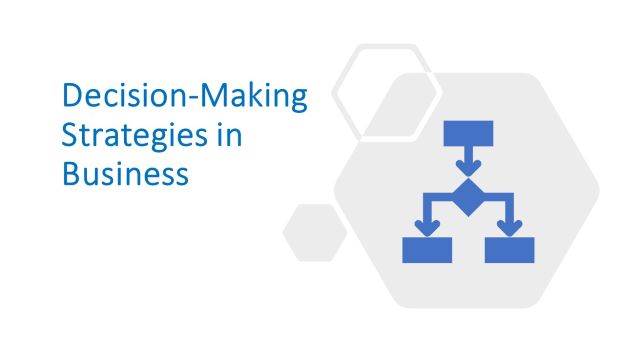
5 Popular Strategies for Decision-Making in Business

10/8/2022

0 Comments

 
​Among the different decision-making models that have been developed for business situations, there are four popular strategies for decision-making: Random choice, Expertise, Consensus, and Command. 
5 popular strategies for decision-making in business
​Each has its own set of benefits and disadvantages. Listed below are some of the benefits and drawbacks of each. Which strategy should you use? How do you make decisions more effectively? How do you overcome infighting and other challenges?

Random choice
Strategic decision-making requires leaders to make a judgment call based on multiple, equifinal options. While random choice is an effective strategy to ensure that decisions are fair and based on the best information available, it also may result in strategic action being forgone. Random choice may also forgo the opportunity to build coalitions or implement change within an organization. But it is important to consider that random choice does not always serve the best interests of the organization. Porter's formulation of strategy emphasizes equifinal choices.

One legitimate way of making a decision is to flip a coin. This method is fast, simple, and unbiased, and it has been used in many cases, from hiring employees to granting research funds. Random choice is also often used by leaders when decisions have little or no consequences, or when multiple options have similar outcomes. A major advantage of random choice is that it removes emotion from the process and helps avoid decision paralysis.

Expertise
Expertise is the process of identifying, interpreting, and using information to make decisions. This process occurs by recognizing and leveraging a person's body of knowledge. In a business context, experts often provide guidance in decision-making. Experts mediate between a person's body of knowledge and decision contexts. According to the definition, an expert is someone who has the necessary knowledge and skill to make good decisions.

While the use of expertise in decision-making can be an efficient means of achieving decisions, it does not necessarily immunize decision-making from democratic concerns. The nature of expert consultations is often opaque and the rationale for these measures is often unpublished. Experts may also be asked to participate in meetings held behind closed doors with decisionmakers. This can undermine the validity of expert opinions. The decisionmakers may prefer to seek clarity over objective, scientific evidence.

Consensus
Consensus-based decision-making has many benefits. For one, it fosters employee engagement. When employees feel part of a solution, they are more likely to provide valuable feedback. Additionally, the process of creating a decision is much more efficient because everyone has plenty of time to share their ideas and elaborate. Consensus-based decision-making can also streamline feedback and information-gathering processes, so it is a good idea to make sure you have plenty of time for discussion.

The first step in the process is to establish an open discussion. This helps people express their opinions and feelings, and to understand the different needs and opinions of everyone. Then, they can brainstorm and come up with solutions that meet their individual needs and wants. The best part about this process is that you do not have to submit proposals - everyone is free to express his or her opinion. The best thing about consensus is that it is built on mixing different ideas and meeting multiple needs.

Command
Commanders who have limited cognitive capacity tend to focus on what might happen in the future and what will happen if they make a wrong decision. This helps them make quick decisions. By applying their knowledge and experience of past situations, they develop strategies to deal with accountability pressures and develop confidence in their decision-making abilities. They may also use past experience to inform their decision-making strategies. But how do commanders develop confidence?

In wartime, the commander determines the objectives of an operation before hostilities commence. He/ She does so using his/her intuition, staff, and guidance. In developing alternatives, the commander weighs the risks of each action, considering the level of success or failure. This way, he/she can influence the actions of others. Moreover, the commander's intuition is invaluable when it comes to making decisions under such conditions. Therefore, he/she focuses on factors that will ensure success and minimize the risk.

Eliminating by aspects
A mental shortcut known as elimination by aspect is used by decisionmakers to shorten their list of possible products by eliminating options that don't meet one aspect of the product. When faced with a large number of products, this model is an effective way to reduce the options. To do this, decisionmakers evaluate one cue at a time until only one alternative remains. However, this method is not appropriate for every situation.
​
While this decision-making strategy is a common technique, it isn't the only one. There are four distinct categories of strategic decisions. There are four different methods that are often used, each based on a different aspect of the problem. Six of these decision rules are used to make decisions, including consensus, delegation, and unanimity. The process of elimination is a logical way to determine which entity is of interest and which isn't. Once an entity is identified, the remaining options are eliminated based on the ranking.

"How fast a decision is made and how good is that decision determines how far the business will thrive". 

​
​Checkout- Top Ten Strategic Decision-Making Tools for Operational Excellence

​
​
Related Reading:
  1. Kaizen for pharmaceutical, medical device and biotech industries
  2. How to cut costs strategically using Kaizen
  3. Streamline processes and workflows with Gemba Walk.
  4. Top Ten Strategic Decision-Making Tools for Operational Excellence

Follow Shruti on Twitter, Facebook, YouTube, LinkedIn

Categories:  Leadership | Strategy

Keywords and Tags:
#operationalexcellence #strategicdecisionmaking #strategy #strategymanagement #decisiontools #decisionmaking #strategicplanning  #challengesofdecisionmaking #OpEx
Get In Touch
0 Comments

Strategic Decision-Making in Strategic Management

9/26/2022

0 Comments

 
The process of strategic decision-making involves defining objectives and criteria for making good decisions. ​Those criteria will then be applied to various available decisions and will help in evaluating them based on these criteria. 
startegic decision-making in strategic management
Effective strategic decisions are specific, measurable, time-bound, and based on the maturity of the organization's activities. However, the process of strategic decision-making is complex and can be confusing. Here are some tips on how to implement strategic decision-making in strategic management:

OODA
Using OODA (Observe- Orient- Decide-Act) for strategic decision-making in strategic management is a process of interactive problem-solving. The loop involves testing the hypothesis and making decisions based on the results. The final step is to take action. By taking rational action, business owners can outpace their competitors. The OODA loop can be applied to many different problems, such as litigation, law enforcement, combat operations and business including those related to competitive advantage. In fact, it is often used by business leaders who are tasked with assessing the potential impact of a strategic decision.

The first phase of the OODA loop is called the "data collection" phase. This is the time when stakeholders observe a scenario developing, and then make decisions based on their findings. As data continues to flow in, the organization can adapt its approach to meet the needs of its stakeholders. A strategic decision-making process should be fast and reliable, and an OODA loop should allow stakeholders to make informed decisions.

Logic tree
A logical tree is a chart used to make decisions. The Logic tree is an organization tool or a critical thinking framework that you can use to diagram all the possible causes of a failure event. The structure of the Logic Tree is hierarchical so that you can easily reference which event caused what effect. Each cause or effect is represented by a labeled icon, called a node.

The top-level node represents the ultimate goal or decision. The branches represent possible outcomes and are generally indicated by an arrow. The branches also include associated costs and the likelihood of the outcomes. A decision tree can be extremely useful for solving problems, managing costs, and discovering opportunities. The tree will also help you determine the optimal course of action.

Logic tree diagrams can be a useful tool for problem-solving and communicating across stakeholders. They are effective for simplifying complex problems and illustrating multiple possible solutions. Logic tree diagrams can be created on paper, white boards, or using a computer. Here are some common examples:

SWOT
The application of SWOT analysis to the strategy of a business helps guide the company toward better strategies or away from less successful ones. An independent SWOT analyst can help guide a company through the process. The analysis is generally presented as a square with four quadrants, representing each element of the company's SWOT. All points should reflect a balance between threats and opportunities. The analysis can help a company determine the best strategy for achieving its goals.

A SWOT analysis is a powerful tool for making strategic decisions and can help a business identify its strengths, weaknesses, opportunities, and threats. It can also help to determine the best way to overcome a specific challenge. It can help a business decide on a strategy to take advantage of opportunities that are in its control. In strategic management, SWOT analysis can help a company identify the most promising strategies and implement them.

Planning
Strategic decision-making is a process in which managers decide what they will do in the future and how to implement that plan. This involves both planning and implementing decisions, although the latter is a more complicated process. For example, strategic decisions involve identifying the strengths and weaknesses of a company's products or services. Then, they can plan a response to changes in the market. For example, a manager might decide to launch a revised product or expand a store.

Whether to adopt a single model or implement a multiperiod approach, strategic planning involves setting goals. The SMART goals, which stand for "specific, measurable, achievable, relevant and time-bound", help business leaders measure performance and determine the overall mission of the company. A measurable goal might include "releasing the first version of a virtual classroom platform in two years," or "increasing sales of an existing tool by 30% in the next year."

Implementation
Strategic decision-making is a process by which a company charts its course based on a long-term vision and mission. Clarifying the big picture aims of a company helps in aligning short-term plans with its mission and vision. Moreover, the process helps in identifying countervailing factors and identifying corporate inflection points.

Good strategic decision-making involves setting criteria for selecting the best choice among many alternatives. When several options are available, the criteria are used to measure each one against the other. The criteria should be specific, measurable, time-based, achievable, and realistic, as they are based on resources and the maturity of activities within an organization. It is important to make good strategic decisions by establishing a clear strategic goal. However, the process is prone to errors, so managers must be aware of the potential risks and the impact of their decisions.
​How fast a decision is made and how good is that decision determines how far the business will thrive.
​Checkout- Top Ten Strategic Decision-Making Tools for Operational Excellence
Get In Touch
Follow Shruti on Twitter, Facebook, YouTube, LinkedIn

Related reading:

  1. ​​Kaizen for pharmaceutical, medical device and biotech industries
  2. How to cut costs strategically using Kaizen
  3. Streamline processes and workflows with Gemba Walk.
  4. Top Ten Strategic Decision-Making Tools for Operational Excellence
Keywords and Tags:

#operationalexcellence #operationalexcellence #strategicdecisionmaking #strategy  #strategymanagement #decisiontools #decisionmaking #strategicplanning  #challengesofdecisionmaking
0 Comments

Challenges in Taking Organizational Strategic Decisions

9/12/2022

0 Comments

 
The challenges in taking organizational strategic decisions are varied and multi-faceted. ​They may include lack of reliable data, executive responsibilities, and flexibility.
challenges in taking organizational strategic decisions
However, despite the numerous challenges, the process of taking such decisions should be healthy and smart. Listed below are a few of the most common problems in taking organizational strategic decisions. Read on to discover how you can overcome these problems. Let us now begin with the key challenges to take organizational strategic decisions.

Smart and healthy
It is crucial for leaders to make both smart and healthy organizational strategic decisions. According to a popular business author, smart and healthy people are equally important. Smart people often overshadow health and vice versa. An effective leadership team sets the tone for a healthy culture. Leaders should spend time together away from the day-to-day operations of the organization to get to know one another better. That time is essential for a healthy leadership team.

Strategic decisions are difficult to make because they involve high stakes and great uncertainty. In this environment, organizations are often slowed by the high volume of high-stakes decisions. They may postpone big-bet decisions, but delaying them can be costly and counterproductive. Simply waiting for the uncertainty to pass can be a decision in itself. Smart and healthy organizations use five principles to guide their decisions. While making decisions is never easy, these principles can help guide leaders and organizations in making the right decision.

Lack of reliable data
Bad data slows down an organization. Not only do decisions based on bad data turn out to be wrong, they also cost the organization time and money. In one Gartner study, companies that fail to use reliable data cost an average of $14.2 million a year. Moreover, it leads to a lack of data quality, a problem that affects all employees in the organization, from data scientists to managers.

Typically, decisions are based on key assumptions, or elements of data that are highly uncertain or prone to changing. For example, a competitor's launch in Europe may significantly alter a company's prospects. Yet, these assumptions are often based on small numbers of data, not a whole lot of information. So, it's not surprising that most decisions are based on a few key assumptions.

Executive responsibilities
The role of the executive is to make certain decisions for the organization. These decisions should improve the performance of the organization as a whole. There are four key strategies for optimizing the impact of strategic decision making. Among the strategies is re-allocating the executive responsibilities. This way, executives have a better understanding of current market conditions and consumer preferences. These strategies can help the organization achieve more success than ever before.

Flexibility
A key aspect of flexible decision-making is the ability to respond to changing external conditions. Strategic flexibility entails the ability to adapt quickly to external change and to evaluate alternative options and decisions. In this post, we examine the characteristics of strategic flexibility and its role in organizational decision-making. Adaptability can help a company to survive the changing world. Read on to learn more about the benefits of strategic flexibility and how it can help you make the right decisions.

One important characteristic of flexibility is the ability to change a system. It is similar to financial options in that it entails changes in a tangible system or investment. The term "option" refers to the right to change a system or investment. By building options into a system, managers can mitigate risks and capitalize on changing market conditions.

Creating a roadmap
A roadmap is an important management and communication tool for a business. Creating one is an effective way to clarify strategic goals, align teams and portfolios, and tie all of your work to the overall strategy. A good roadmap will also convey the duration of work items. Here are three ways to make your roadmap clear and compelling. Once you've created your roadmap, it's time to engage stakeholders and put it to work.
​
One of the biggest challenges executives face is balancing priorities. Without a roadmap, projects may be allocated too much resources or not enough resources. A roadmap will allow executives to evaluate new initiatives and projects strategically. It will also help them visualize trade-offs and balance priorities. It will also improve executive alignment and stakeholder buy-in. By creating and following a roadmap, you can ensure that your organization is achieving its goals.
​How fast a decision is made and how good is that decision determines how far the business will thrive.
​Checkout- Top Ten Strategic Decision-Making Tools for Operational Excellence
Get In Touch
Follow Shruti on Twitter, Facebook, YouTube, LinkedIn

Related reading:

  1. Kaizen for pharmaceutical, medical device and biotech industries
  2. How to cut costs strategically using Kaizen
  3. Streamline processes and workflows with Gemba Walk.
  4. Top Ten Strategic Decision-Making Tools for Operational Excellence
Keywords and Tags:

#operationalexcellence #operationalexcellence #strategicdecisionmaking #strategy  #strategymanagement #decisiontools #decisionmaking #strategicplanning  #challengesofdecisionmaking  #organizationalchange​
0 Comments

Role of Strategic Decision-Making on Cost-Effectiveness Ratios

8/15/2022

0 Comments

 
In this post, we look at three key factors that can lead to effective strategic decision-making. These include process-driven cost management, corporate inflection points, and improvised business strategies. 
role of strategic decision making on cost-effectiveness ratios
I will also discuss the role of cost-effectiveness ratios in strategic decision-making. I'll close with an example of the effectiveness of process-driven cost management. This process can help companies improve their cost-effectiveness and profitability.

Effective strategic decision-making
Increasing cost-effectiveness of a strategic action increases the likelihood of its implementation by adding incremental costs to each strategy. To determine cost-effectiveness, strategies are ranked by increasing their costs, and strategies with a higher cost per unit of output are referred to as strongly dominated. Rational decisionmakers would never implement a strongly dominated strategy, so these options are automatically eliminated from consideration.

To evaluate a business decision, create two lists containing both the direct and indirect costs. Direct costs include labor, raw materials, manufacturing and inventory costs. Indirect costs include management overhead and rent. Intangible costs include costs related to customer perception, employee productivity, and time. Additionally, consider the risks related to the proposed strategy, such as competition, regulation, and the environmental impact. After identifying the costs, assess the benefits of implementing the strategy and its risks.

Process-driven cost management
As a project manager, you must be able to answer questions without an approved budget. The same is true when you are already in the middle of a project and need to determine whether you have enough resources to complete it. For large organizations, this may be difficult because of multiple projects running at once, changes in initial assumptions, and unexpected costs. With this in mind, you need to understand the critical steps of cost control.

To begin the process of measuring and controlling costs, you must develop a cost management plan. The plan should include information on the project's performance and include a threshold for deviations and what to do if it is breached. Earned value management is one popular way to measure cost performance. For example, you can say that a task is 25% complete if it is 25% completed. Then, you can measure how many stories and other factors the project includes.

Regardless of how much time an organization spends on procurement, cost-efficiency begins with managing costs and reducing them. Visibility of cost data and the ability to fine-tune processes improves decision-making. Having transparency of cost and spend data can reveal areas of the organization that need to be improved, allowing companies to focus more on strategic initiatives. If a company does not have visibility of cost and spend data, they will always be playing catch-up. In addition to cost-efficiency, companies cannot manage their spending without being transparent.

Analysis of cost-effectiveness ratios
To calculate the incremental cost-effectiveness ratio, you first determine which strategies have the highest and lowest marginal cost-effectiveness ratios. The higher the cost, the higher the incremental cost-effectiveness ratio (ICER). The lower the cost-effectiveness ratio, the lower the marginal cost-effectiveness ratio. As such, the lower the marginal cost-effectiveness ratio, the higher the health improvement with a given resource expenditure.

When performing a cost-effectiveness analysis, you must consider how these ratios will affect the outcomes and the costs. These ratios aren't official in most countries, but they do have a wide application in decision-making. A cost-effectiveness ratio can provide insight into the performance of a specific treatment based on the results of a trial. To perform a cost-effectiveness analysis, you should define the clinical problem and consider both the payer and societal perspective. For example, a study comparing SPECT to stress echocardiography should consider both patient and provider costs.

Despite the popularity of the Cost-Effectiveness Ratio (CER) method, it is important to note that CER isn't the same as a cost-benefit analysis. It refers to the cost-effectiveness of an action compared with its costs of inaction. For example, a vaccination program for an adult saves $10 per person in ongoing medical care costs compared to no vaccination at all.
How fast a decision is made and how good is that decision determines how far the business will thrive.
Checkout- Top Ten Strategic Decision-Making Tools for Operational Excellence​
Get In Touch
Follow Shruti on Twitter, Facebook, YouTube, LinkedIn

Related reading:

  1. Kaizen for pharmaceutical, medical device and biotech industries
  2. How to cut costs strategically using Kaizen
  3. Streamline processes and workflows with Gemba Walk.
  4. Top Ten Strategic Decision-Making Tools for Operational Excellence
Keywords and Tags:

#operationalexcellence #strategicdecisionmaking #strategy #strategymanagement #decisiontools #decisionmaking #strategicplanning  #challengesofdecisionmaking  @costeffectivenessratios  #costcutting  #costcontrol
0 Comments

The Role of Strategic Decision-Making on Productivity

7/25/2022

0 Comments

 
​How to improve your team's productivity and achieve greater success? By understanding the importance and process of strategic decision-making, you'll be better equipped to make informed decisions. 
the role of strategic decision-making on productivity
Ultimately, strategic decision-making means making the right decisions at the right time. The difference between strategic decision-making and implementation is that the former involves making a decision and the latter involves doing the work. But, what does strategic decision-making really mean?

Impact of strategic decision-making on productivity
The rationality of strategic decision-making has been correlated with productivity in organizations. The degree of rationality has been found to vary with the extent of the decision-making process. The level of rationality is associated with the magnitude of the impact of the decision. However, the level of rationality does not always explain the variation in the total variation in decision-making quality. As a result, this research has limitations.

Using data is an increasingly popular way to make strategic decisions. While it is not as quick as a hunch, data-driven decision-making is increasingly common in business. This type of decision-making process involves the five basic steps of decision-making. It also incorporates concepts of opportunity, threat, countervailing factors, and risk. In addition to the five-step process, this technique also focuses on the long-term future of an organization.

Process
This study examines the relationship between strategic decision-making and productivity in small and medium-sized enterprises. In this case, the variables of strategic decision-making are financial performance, organizational effectiveness, political behavior, and intuition. The findings indicate that organizational effectiveness is associated with high-quality strategic decisions. Furthermore, a high-performance firm tends to make rational and less intuitive strategic decisions. However, the study also shows that the effects of organizational effectiveness are stronger when strategic decision-making is correlated with financial performance than when predicting the outcomes of organizational effectiveness.

Although strategic decision-making may not always result in immediate productivity increases, it can give an organization time to adapt to unforeseen situations and innovate. However, the process of strategic decision-making is not self-generative, and management is responsible for ensuring that these decisions are made. Strategic management consists of four phases: mission determination, assessment of opportunities and threats, implementation, and evaluation. It is important to have the right mix of all of these steps in order to improve your organization's productivity.

Importance
Strategic decision-making is one of the most critical skills for today's leaders. It is a critical part of a business's operations because it can lead to competitive advantage. The process requires careful consideration of the short-term, medium-term, and long-term futures of an organization. To improve the effectiveness of strategic decision-making, practice and decision-tools are the key. Developing this skill will improve your business's productivity.

The process of strategic decision-making is a two-step process. First, it involves identifying the most critical strategic priorities of an organization. Then, it involves evaluating those priorities against the criteria that determine which decisions are best. Second, it involves implementation. Once a decision is made, the process must be followed through. Strategic decision-making requires action. But it is not as simple as choosing a decision and then implementing it. In order to be effective, strategic decision-making should be based on the criteria that guide the organization.

Third, strategic decision-making requires collaboration and sharing of data across organizational boundaries. Often, organizations fail to give business data personalization. Moreover, they need to be responsive to disruptions and opportunities. As a result, strategic decision-making is a continuous process. In the end, strategic planning improves productivity. However, it doesn't mean that decision-making is an end-to-end process.

Team involvement
Oftentimes, managers shy away from involving their teams in decision-making. But a variety of perspectives can be invaluable for decision-making success. Research has shown that the more people a team includes, the more creative and innovative it is likely to be. Team involvement in strategic decision-making can build employee engagement and boost overall productivity.
​
Groups that work better with equal participation foster critical thinking and equality. Leaders should encourage team members to ask questions and clarify differences. Remember that the goal is to promote accurate understanding. As long as everyone is working towards the same goal, the team will be more productive.
​How fast a decision is made and how good is that decision determines how far the business will thrive.
Checkout- Top Ten Strategic Decision-Making Tools for Operational Excellence
Get In Touch
​Follow Shruti on Twitter, Facebook, YouTube, LinkedIn

Related reading:

  1. Kaizen for pharmaceutical, medical device and biotech industries
  2. How to cut costs strategically using Kaizen
  3. Streamline processes and workflows with Gemba Walk.
  4. Top Ten Strategic Decision-Making Tools for Operational Excellence
Keywords and Tags:

#operationalexcellence #strategicdecisionmaking #strategy #strategymanagement #decisiontools #decisionmaking #strategicplanning  #challengesofdecisionmaking #productivityimprovement
0 Comments

The Role of Strategic Decision-Making in Supply Chain Management

7/18/2022

0 Comments

 
As a supplier, you must consider your bottom line as a part of your strategic decision-making process. ​Profitability is the lifeblood of any organization; it keeps you in business and serves your customers.
the role of strategic decision-making in supply chain management
In this post, I'll discuss the importance of rational decision-making in supply chain management. I'll also explore the impact of rational decision-making on asset utilization. You'll see how this type of strategic decision-making will benefit your bottom line.

Importance of rational decision-making in supply chain management
A key component of successful supply chain management is the ability to make rational decisions. While perfect economic rationality leads to the highest profit, it does not consider sustainability, reputation, or other factors. Many companies consider these factors in their decision-making process, and they often compromise between these three values to ensure that their supply chains are as efficient and cost-effective as possible. Despite these difficulties, it is important to note that supply chains can still be sustainable and ethical if managers use the right principles to guide them.

One of the key skills required to be an effective supply chain manager is the ability to make quick decisions. Quick decisions are often crucial in order to avoid costly interruptions. Moreover, supply chain management careers are dynamic and unpredictable, which makes quick decisions an essential trait. By making quick decisions, you will be able to effectively use staff and protect the goals of your organization. So, what are some other important skills required to be a successful supply chain leader?

A study results revealed that different factors affect decisionmaker's behavior in different ways. For example, the extent of bullwhip effect variation and the tendency of service level are different for different decisionmakers. (Tip: The Bullwhip effect refers to the phenomenon where order variability increases as the orders move upstream in the supply chain). The authors (of the study) also developed a system dynamics model of a supply chain that conforms to modern supply chain characteristics. They added two adjustment parameters and simulated the results. Based on the results, they concluded that behavioral adjustments with varying extents have different effects on supply chain performance.

Impact of rational decision-making on bottom line
Rationality is the ability to come to an informed decision. Rational decision-making models are logical and sequential and focus on listing various courses of action and evaluating the best one. They typically list all of the options, including their pros and cons, in order of importance. They begin by identifying a problem or opportunity, and then assess all options. Finally, they assign values to each option.

Applied to a supply chain management case study, researchers at the University of Lund applied a model of rational decision-making to the system. In this model, a problem is identified, a number of solutions are identified, and data is gathered to analyze the alternatives. The decisionmakers then choose the best solution and implement it. The process may also involve identifying trade-offs that affect the bottom line of supply chain management.

The downside of intuitive decision-making is that it's difficult to justify decisions after the fact. Because the decision-making process relies on accumulated knowledge, it is prone to cognitive biases. In contrast, systematic decision-making models use data analytics software and prescribed steps to arrive at optimal decisions. They can also help managers analyze multiple alternatives, which may reveal more than one advantage. So, how does rational decision-making affect the bottom line of supply chain management?

Impact of rational decision-making on asset utilization
Regulatory reforms and other disruptive events are often more detrimental than unforeseen ones. However, leaders can minimize the damage by minimizing the impacts of disruptive events by improving process flow and early identification. As a result, supply chains that have higher levels of operational slack have fewer disruptive events and greater flexibility. This may have a positive impact on a firm's ability to handle these events.

An article pool presents a thorough review of the advances in the field, and then provides managerial insights and ideas for further research. The authors also discuss the effects of supply chain disruptions and ripple effects, as well as analysis of current literature and comparisons. The article pool concludes with a list of research ideas that can be used to improve the effectiveness of supply chains. However, it is important to note that research on the topic of ripple effects is still in its early stages.
​
With mounting customer demands and the need for growth, supply chain leaders are tasked with optimizing the overall performance of the company's supply chain. However, while traditional goals such as working capital and profit margins remain important, a focus on revenue growth targets may be more effective. Initiatives aimed at cutting costs have had little success in structuring sustainable relationships. Thus, focusing on revenue growth is an important strategy for achieving profitable growth.
How fast a decision is made and how good is that decision determines how far the business will thrive.
​Checkout- Top Ten Strategic Decision-Making Tools for Operational Excellence
Get In Touch
Follow Shruti on Twitter, Facebook, YouTube, LinkedIn

Related reading:

  1. Kaizen for pharmaceutical, medical device and biotech industries
  2. How to cut costs strategically using Kaizen
  3. Streamline processes and workflows with Gemba Walk.
  4. Top Ten Strategic Decision-Making Tools for Operational Excellence
​Keywords and Tags:

#operationalexcellence #strategy #strategicdecisionmaking #strategymanagement #decisiontools #decisionmaking #strategicplanning  #challengesofdecisionmaking #supplychainmanagement
0 Comments

The Role of Strategic Decision-Making on Operational Excellence

7/4/2022

0 Comments

 
​In order to achieve Operational Excellence (OpEx), companies must develop Lean, scalable, and repeatable processes, engage workforces, and make continuous communications with customers and employees. 
the role of strategic decision-making on operational excellence
Ultimately, this type of management philosophy leads to tangible results. Read on to discover how this management philosophy can help you achieve operational excellence. It's never too late to start. Ultimately, it's all about your business. As you continue to improve, your company's operational excellence will evolve, too.

Operations excellence requires Lean, predictable, and scalable processes. In order to succeed at operational excellence, your processes should be based on the customer's needs. Delivering the right product to the right customer at the right price is crucial to success. Organizations that focus on creating value for customers are more likely to succeed than those that focus on cost-reduction. Read on to learn why...

But first, let's talk about what operations excellence is. Operational excellence refers to an organization's focus on customer satisfaction and business efficiency.

The DMAIC / PDCA cycle is an essential part of operational excellence. Six Sigma, for example, focuses on control of variation and statistical rigor. Lean, on the other hand, focuses on reducing non-value-added activities. Both approaches require data collection and analysis. To be successful, they must be tailored to the business process. When combined, they can help transform the whole organization.

OpEx requires constant communication. To succeed at operational excellence, a company must have continuous communication, continuous improvements, and workforce engagement. These three factors will help keep it competitive and on-track with market trends. Here are some ways to improve employee communication and increase your company's operational efficiency:

The first step is to communicate operational excellence to all employees. The reason for this is that operational excellence can help you understand your customer's needs and help you determine what resources are needed to meet those needs. Once everyone understands the objectives of the process, you can begin to implement improvements and see a significant increase in efficiency. Ultimately, operational excellence will make your business more competitive and increase your profits.

When you implement operational excellence, the bottom-line employees should be empowered to identify problems and disrupt the flow of value. The upper levels of the organization are responsible for business strategy and managing the resources required to maintain the flow of work. Continuous communication should take place at all levels of the company, including the executive team. By enabling frontline employees to communicate and understand their roles and responsibilities, you will foster a culture of continuous improvement throughout the company.

OpEx requires workforce engagement. Operational Excellence is not simply about cost reduction and improved productivity. Rather, it is about building a culture that will allow a company to create valuable products and achieve long-term sustainable growth. Successful Operational Excellence programs apply the right tools to the right processes and create an ideal work culture. For more information, download this book Top Ten Strategic Decision-Making Tools for Operational Excellence.

Here are some of the most common ways to implement operational excellence at your manufacturing/ service-based business-

The manufacturing sector is no stranger to operational excellence initiatives. From increased productivity to reduced downtime, factories are under increasing pressure to improve their bottom line. For example, the construction industry places a premium on employee safety, with a popular construction firm adopting an employee communication app. Healthcare is another industry in need of cost-savings. A recent published report highlighted the importance of a Lean operational model, clinical standardization, and employee engagement in acute-care facilities.

OpEx yields tangible results. Usually, poor grasp of operational efficiency leads to company failure. Although Lean and continuous improvement are vital to success, the focus of leadership should be on operational excellence. When executed properly, operational excellence will drive lower costs, higher revenues, less risk, and happier customers. That's why it's so important to develop a strategic plan for operational excellence. Here are some tips to help you get started-

​Empower your employees with authority and responsibility. Empowering your staff to take ownership and make decisions is essential to building a positive organizational culture. Empowering team members and allowing them to make suggestions will help you attract top talent and increase demand. Standardize processes and codify best practices to help your company grow. And once you've mastered them, implementing new processes, procedures and building operational excellence will be easier than ever.
Get In Touch
Follow Shruti on Twitter, Facebook, YouTube, LinkedIn

Related reading:

  1. Kaizen for pharmaceutical, medical device and biotech industries
  2. How to cut costs strategically using Kaizen
  3. Streamline processes and workflows with Gemba Walk.
  4. Top Ten Strategic Decision-Making Tools for Operational Excellence
Keywords and Tags:

#operationalexcellence #strategy #strategicdecisionmaking  #strategymanagement #decisiontools #decisionmaking #strategicplanning  #challengesofdecisionmaking  #operationalexcellence #opex
0 Comments
<<Previous
Forward>>

    New Book Released!

    Revolutionizing Industries with Lean Six Sigma

    Shruti's YouTube Channel ...

    Picture

    Blog Categories

    All
    3D Printing
    Agile
    Artificial Intelligence
    Automation
    Biotechnology
    Books
    Business Continuity
    Business Turnaround
    Case Studies
    Change Management
    Checklists
    Chemical Industry
    Continuous Improvement
    Design Thinking
    Digitalization
    Drug Delivery
    External News Links
    Hall Of Fame
    Healthcare
    Hoshin Kanri
    HR Development
    Innovation
    Insights
    ISO
    Just In Time
    Kaizen
    Leadership
    LEAN
    Lean Six Sigma
    Life Sciences
    Machine Learning
    Manufacturing
    Medical Devices & Prosthetics
    Mistake Proofing
    Motivational Cards
    MSMEs
    Nanotechnology
    Operational Excellence
    OpEx Models
    Packaging
    Patents
    Personal Products
    Process Improvement
    Product Development
    Productivity Increase
    QbD
    Quality Management
    R&D Leadership
    Robotics
    Service Industry
    Six Sigma
    Strategy
    Supply Chain Logistics
    Telecom Industry
    Templates
    TQM
    Videos
    Voice Of Customer
    Whitepaper
    Workshops

    Shruti's books...

    Picture
    top ten strategic decision-making tools for operational excellence
    shruti bhat, business process management, continuous improvement
    kaizen for pharmaceutcials, medical devices and biotech industry book by Dr Shruti Bhat
    Book on Continuous improvement tools by Dr Shruti Bhat
    kaizen for leaders, continuous process improvement tool to increase profit and organizational excellence by shruti bhat
    kaizen, shruti bhat, continuous improvement, quality, operations management
    how to lead a successful business transformation
    leading organizations through crisis
    emotional intelligence
    how to overcome challenges of creating effective teams
    modular kaizen Vs Blitz kaizen
    How to increase employee engagement as a new boss

Connect with Dr. Shruti Bhat at- ​YouTube, LinkedIn​ and X

© Copyright 1992- 2026 Dr. Shruti Bhat ALL RIGHTS RESERVED.
See Terms and Conditions details for this site usage.
Picture
Subscribe to PharmaOps Consulting YouTube Channel
Subscribe to Operational Excellence Academy YouTube Channel
​Subscribe to Operational Excellence Academy YouTube Channel
SHRUTI BHAT, CONTACT
Click to connect.
Disclaimer:
  • All content (and in all formats) provided on this site is for educational purposes only. It does not constitute legal, regulatory, quality, financial, medical or professional advice. If you wish to apply ideas contained on this site, web pages, resources bank, tools and/or blog; collectively referred to as website, you are taking full responsibility for your actions. 
  • No professional-client relationship is created by reading or using this content. 
  • ​To the fullest extent permitted by law, the author(s), Dr. Shruti Bhat and website owner disclaim liability for any loss or damage arising from reliance on the information contained herein. Read full disclaimer here before reviewing the site.
Created by Macro2Micro Media