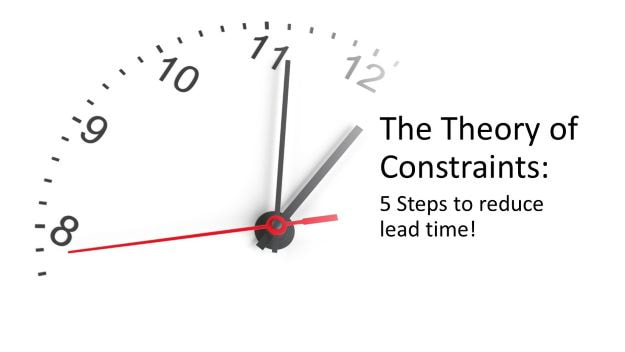
The theory of constraints (TOC) is a management method that helps companies understand & improve their processes and the business's operational excellence.
At the same time, you will improve profitability and improve the performance of your company. If you are experiencing a bottleneck, the theory of constraints is an excellent solution. It is a systematic approach for solving complex problems.
The theory of constraints is a systematic approach to logistics analysis, and its strategies emphasize efficient decision-making. It has five steps that help you improve your processes. You must first agree on your problem and the constraints that are causing it. Once you have agreed on the constraints and what needs to be improved, you can then move on to the next step.
The method is based on the concept that a system consists of a series of interdependent processes. This theory identifies the bottleneck or weak link in the system’s processes. In this way, it helps in process improvement, especially to reduce lead times.
By following the 5 Steps, you can create a comprehensive plan for improving your business processes and achieving your goals. You'll find the steps to implement the theory much easier. You begin by identifying the bottleneck, but this can be a difficult task. It is important to realize that there are many variables in a system.
The five steps of theory of constraints make it a powerful tool for any business. Ultimately, using this method can help you improve your business processes and increase profits. I have a separate post on What is theory of constraints and what are its principles. You may check it out here.
Theory of constraint's five steps to improve productivity:
The first step is to identify your weak link and prioritize the activities that will help you improve your process. Your goal is to increase throughput by identifying the weak link and concentrating on resolving it. This process can improve your company's productivity by eliminating waste. In addition, it can reduce lead times and work-in-process.
The second step is to exploit the constraint. This step is essential for improving the efficiency of processes. It is important to realize that a constraint does not need to be a permanent one. You should find ways to exploit it so that your system can operate at its maximum capacity.
The third step involves eliminating the bottleneck. The bottleneck can be external or internal. For example, it could be a competitor or an influential force in the market or a low-speed machine etc. In either cases, you must identify and exploit the bottleneck. By implementing an improvement strategy, you will increase throughput.
After you identify your constraint, the fourth step is that you need to improve the capacity of all other systems in the system. The rest of the system needs to support it and provide a buffer of safety stock to prevent it from being overloaded.
The fifth step is to repeat the cycle.
Tip: You may also need to adjust established policies and habits so that you can improve your output. Moreover, you need to increase your capacity and invest in new equipment or people.
Related Reading:
Follow Shruti on Twitter, YouTube, LinkedIn
Categories: Continuous Improvement | Operations | Process Improvement
Keywords and Tags:
#operationalexcellence #reduceleadtime #constraint #theoryofconstraints #visualmanagement #kaizen #problemsolving #organizationaldevelopment #reducebottlnecks
At the same time, you will improve profitability and improve the performance of your company. If you are experiencing a bottleneck, the theory of constraints is an excellent solution. It is a systematic approach for solving complex problems.
The theory of constraints is a systematic approach to logistics analysis, and its strategies emphasize efficient decision-making. It has five steps that help you improve your processes. You must first agree on your problem and the constraints that are causing it. Once you have agreed on the constraints and what needs to be improved, you can then move on to the next step.
The method is based on the concept that a system consists of a series of interdependent processes. This theory identifies the bottleneck or weak link in the system’s processes. In this way, it helps in process improvement, especially to reduce lead times.
By following the 5 Steps, you can create a comprehensive plan for improving your business processes and achieving your goals. You'll find the steps to implement the theory much easier. You begin by identifying the bottleneck, but this can be a difficult task. It is important to realize that there are many variables in a system.
The five steps of theory of constraints make it a powerful tool for any business. Ultimately, using this method can help you improve your business processes and increase profits. I have a separate post on What is theory of constraints and what are its principles. You may check it out here.
Theory of constraint's five steps to improve productivity:
The first step is to identify your weak link and prioritize the activities that will help you improve your process. Your goal is to increase throughput by identifying the weak link and concentrating on resolving it. This process can improve your company's productivity by eliminating waste. In addition, it can reduce lead times and work-in-process.
The second step is to exploit the constraint. This step is essential for improving the efficiency of processes. It is important to realize that a constraint does not need to be a permanent one. You should find ways to exploit it so that your system can operate at its maximum capacity.
The third step involves eliminating the bottleneck. The bottleneck can be external or internal. For example, it could be a competitor or an influential force in the market or a low-speed machine etc. In either cases, you must identify and exploit the bottleneck. By implementing an improvement strategy, you will increase throughput.
After you identify your constraint, the fourth step is that you need to improve the capacity of all other systems in the system. The rest of the system needs to support it and provide a buffer of safety stock to prevent it from being overloaded.
The fifth step is to repeat the cycle.
Tip: You may also need to adjust established policies and habits so that you can improve your output. Moreover, you need to increase your capacity and invest in new equipment or people.
Related Reading:
- How to cut costs strategically using Kaizen
- Streamline processes and workflows with Gemba Walk.
- Top Ten Strategic Decision-Making Tools for Operational Excellence
Follow Shruti on Twitter, YouTube, LinkedIn
Categories: Continuous Improvement | Operations | Process Improvement
Keywords and Tags:
#operationalexcellence #reduceleadtime #constraint #theoryofconstraints #visualmanagement #kaizen #problemsolving #organizationaldevelopment #reducebottlnecks