Shruti Bhat PhD, MBA, Operations Excellence Expert
  • Home
  • Shruti
  • Operational Excellence Hub
  • OpEx Models
  • Writings
    • Process Improvement
    • Business Transformation
    • Innovation Management
    • Leading Research and Development
    • Developer's Diary
    • Business Continuity
    • Change Management
    • Digital Transformation
    • Quality Improvement and Compliance
    • Free eBooks and Whitepapers
    • Checklists and Templates
  • Books
  • Services
    • PharmaOps Consulting
    • Tara LeanWorks
    • Training Services
  • Blog
  • Insights
  • Case Studies
  • Patents
  • Print Publications
  • Videos
  • Contact

Enhancing R&D Efficiency in Biotech with TQM

1/6/2025

0 Comments

 
Spotlight: Struggling with delays and high costs in R&D? This case study details how a biotech company transformed inefficiencies into streamlined success using TQM principles. By integrating development, quality planning, fostering cross-departmental collaboration, and tracking performance metrics, they achieved a 25% reduction in development cycle times and a 15% decrease in project costs.

Learn how TQM enhances R&D productivity and operational excellence while maintaining top-notch quality standards. Read full story below ...
Enhancing R&D Efficiency in Biotech with TQM
Enhancing R&D Efficiency in Biotech with TQM- A Success Story.

A Latin American biotech company was facing challenges with inefficiencies in its R&D processes, which resulted in delays in product development and escalating costs. These setbacks not only impacted the company’s time-to-market but also strained resources, making it difficult to maintain a competitive edge in a fast-paced industry. Recognizing the need to improve productivity and reduce costs, the company sought a solution that would streamline their R&D processes without compromising product quality and market launch schedules.

To address these challenges, a facility audit was conducted and a SIPOC map was created. Based on the study findings the company was recommended installation of Total Quality Management (TQM) in their R&D division. Cost-benefit analysis was done, and a tentative road map was designed including the various phases of TQM installation, potential benefits and the delivery milestones.

Moreover, the TQM principles were tailored for their research and development work processes and development pipeline. This was done to overcome the problems faced by the R&D division and any impact of those problems on the organization.

TQM’s structured approach helped in setting up a clear framework for quality planning, performance tracking and collaboration. Quality planning was integrated at the onset of each project to establish benchmarks and align goals across departments. Performance metrics were also implemented to monitor progress at each phase, providing real-time insights that allowed the team to identify and address any bottlenecks swiftly. Additionally, TQM fostered cross-departmental collaboration, breaking down silos and enabling smoother communication among research, regulatory, marketing, production and quality teams, all of whom were integral to the R&D process.

The results were transformative!

The company saw a 25% reduction in development cycle times, enabling faster progression from concept to product. Improved collaboration between departments not only enhanced communication but also led to more cohesive project management, as each team worked together toward common goals. Furthermore, the streamlined processes and efficiency improvements led to a 15% reduction in project costs, allowing the company to allocate resources more effectively and increase its overall productivity.

This success story highlights the power of TQM in enhancing productivity and operational excellence within biotech R&D. By implementing quality-focused planning, performance monitoring and fostering a collaborative culture, the company achieved faster development cycles and significant cost savings. TQM proved to be a vital strategy, ensuring that quality remained a priority while promoting efficiency at every stage.

For biotech firms aiming to improve R&D performance, TQM offers a clear path to structured growth and sustainable success. 

​And, by the way, TQM can enhance productivity and operational excellence of R&Ds of just about any industry sector!

Ready to Revolutionize Your R&D Efficiency?
Discover how Total Quality Management (TQM) can transform your R&D processes just like it did for this biotech company.
  • Cut development cycle times by 25%
  • Reduce project costs by 15% or more.
  • Foster collaboration and efficiency across teams.
Our proven approach to auditing, planning, and implementing TQM is tailored to your unique challenges and industry. Take the first step towards operational excellence and measurable results.

👉 Contact us today and start your journey to optimized R&D success!

Let’s make your R&D a competitive advantage. Schedule Your Consultation Now!
Get in Touch
More Operational Excellence Case Studies at: https://www.drshrutibhat.com/blog/category/case-studies

Keywords and Tags:
#TotalQualityManagement #TQM #BiotechR&D #ResearchEfficiency #ProductDevelopment #CostReduction #CrossFunctionalCollaboration #OperationalExcellence #R&DEfficiency #QualityPlanning #BiotechSuccess #ProcessImprovement #PerformanceMetrics #ReduceCycleTime #Biotechnology

Categories:  Case Studies | Biotech Industry | Operational Excellence |  R&D Leadership

​Follow Shruti on Twitter, YouTube, LinkedIn

​Subscribe to Operational Excellence Academy YouTube channel:

Picture
0 Comments

What Is Scrum? A Powerful R&D Productivity Improvement Methodology

11/7/2022

0 Comments

 
"Want to Accelerate Your R&D? 

Stop struggling with slow R&D cycles. Discover How Scrum Can Transform Your Process in Just 30 Days"

Learn how Scrum, originally a software framework, is now a powerful process improvement tool in R&D—helping teams experiment quickly, minimize nonproductive work, and deliver value in predictable increments. Discover the roles of Scrum Master, Product Owner, and Team, and how this methodology drives transparency, rapid feedback, and faster time‑to‑market in industries beyond tech.

Dive into the full insights in this blog: “What is Scrum? — Scrum, a dependable R&D productivity improvement tool.”

Spotlight: Scrum is no longer just a software development framework—it’s increasingly recognized as a powerful methodology to enhance R&D productivity. By delivering value in iterative cycles, promoting team collaboration, and reducing inefficiencies, Scrum empowers R&D departments to adapt rapidly and consistently reach their goals.

Explore how integrating Scrum into your R&D operations can boost efficiency, slash non-productive time, and deliver customer value faster—read the full post below...
what is scrum?
What is Scrum? A Proven Tool to Enhance R&D Productivity-

Getting the first mover advantage is the vision of all companies, especially those involved in research and development activities. Because, fast new product launch is one of the key avenues for increasing a company's operational excellence.

Developing products fast in order to launch them faster (than competitors) in markets requires more than just skilled R&D talent pool. Today, R&D's productivity in addition to research skills, is based on the process efficiency of the R&D department. There are over a dozen R&D process improvement methodologies which are time-tested and offer very good returns. One such well-known R&D process efficiency improvement methodology is Scrum.

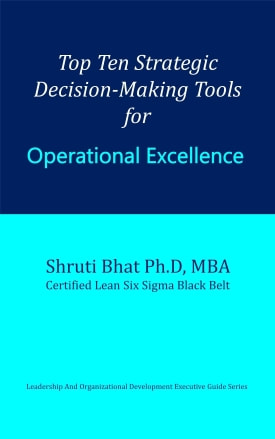
  • Top Ten Strategic Decision-Making Tools for Operational Excellence.
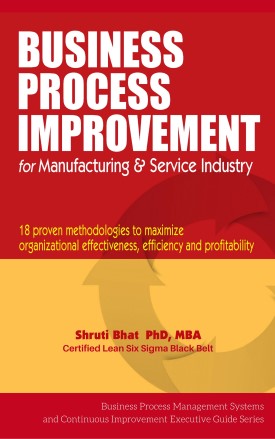
  • 18 Proven Methodologies to Maximize Organizational Effectiveness, Efficiency and Profitability.

Scrum started out as a software development method that focuses on delivering features and application products in predictable increments, with consistent feedback. But today, Scrum is a very competent R&D process improvement tool and is used by research and development departments in all industry sectors.

Scrum approach reduces non-productive work and spreads testing throughout the development process. It allows teams to experiment and fail quickly, which reduces cost and time to market. In addition, Scrum enables a team to respond quickly to changes in the business and avoid scope creep.
 
A Scrum taskforce is composed of three key roles: a Scrum Master, a Product Owner, and a Team. The Scrum Master is responsible for facilitating meetings and ensuring that the development process proceeds efficiently. As the Product Owner, he/she defines the backlog and is the most senior member of the taskforce. While, the Team consists of the Scrum team members. 
 
The goal of Scrum methodology is to deliver 'value' to the customer.

This means that teams create a functional, user-friendly piece of product every few weeks, known as an increment. Feedback from each increment helps the team decide what to do next. By delivering value frequently, Scrum encourages transparency and collective responsibility. Having said so, note that Scrum differs from Agile in several ways. While Agile emphasizes daily interaction between developers and business users, Scrum emphasizes a collaborative approach to project development. In case you wish to learn more about the difference between Agile and Scrum, feel free to checkout my below-mentioned posts:

  • Accelerate business growth with Agile- Part 1
  • Accelerate business growth with Agile Part 2: Top 10 Frequently Asked Questions on Agile.
 
In Scrum, developers and business owners work together to deliver products at a rapid rate. This process consists of several phases: planning, daily standup meetings, spring demonstration of the work product, and retrospectives to understand what went well and what needs improvement.
 
In Scrum, the team works under the guidance of a Scrum Master, a person who serves as a coach for the team. A Scrum Master facilitates collaboration and helps the team perform at its maximum level. The Scrum Master also protects the team from unnecessary distractions and allows the team to focus on the sprint goal.

Tip: The Scrum Master differs from a traditional project manager, however, in that a Scrum Master does not assign tasks or provide day-to-day direction.
 
The Scrum Master also serves as a cheerleader for the team and ensures that the Scrum methodology is properly followed. Scrum teams are characterized by high morale, and each sprint produces a product ready for market. In fact, Scrum-driven projects bring-on faster operational excellence.
 
The Scrum framework is an iterative process that requires teams to constantly review their progress and identify obstacles to progress. The Product Owner has responsibility for what the team builds. He/she keeps a backlog of work organized in priority order.

The Scrum process involves a series of iterations, each cycle lasting no longer than a week. In each cycle, the team iterates in order to deliver a new feature. These cycles are timeboxed and are generally completed within a month. Which means first returns on investment for R&D productivity improvement via Scrum could come in around 30 days. However, do make sure to continue with Scrum cycles iteration to your R&D processes in order to keep the ROI rolling-in.

Related Reading:​
  1. How to cut costs strategically using Kaizen
  2. Streamline processes and workflows with Gemba Walk.
  3. Top Ten Strategic Decision-Making Tools for Operational Excellence

Follow Shruti on YouTube, LinkedIn, X

Categories:  Productivity Increase | Operations | Process Improvement

Keywords and Tags:
#Scrum #Agile #RnDProductivity #OperationalExcellence #LeanAgile #Innovation #FastToMarket #ProcessImprovement #productdevelopment #scrumprojectmanagement #scrummaster #scrumteam #researchanddevelopmentproductivityimprovement
0 Comments

Lean Manufacturing in Food, Drug, Cosmetics & Chemical Industry
2/25/2020

0 Comments

 
Here is a case study that exemplifies ​improved productivity of pellet manufacturing by 28% per shift via LEAN. 
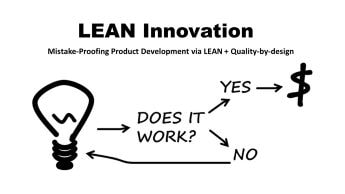
Learn about how to use LEAN Business Process Improvement methodology for
​Innovation and Manufacturing …
To learn more about how Shruti can help your organization achieve new heights or to book a Workshop, Contact Dr. Shruti Bhat via Form or WhatsApp

Follow Shruti on Twitter, Facebook, YouTube, LinkedIn 
Keywords and Tags:

​#Manufacturing #Lean #ContinuousImprovement #Kaizen  #QualityImprovement  #ManufacturingManagement  #Pharmaceutical  #LifeSciences  #Food  #Beverage  #Biotechnology  #LeanManagement 
0 Comments

How to Reduce Testing Load of Analytical Labs in R&Ds? A Six Sigma Case Study in a Biotech Company

1/22/2020

0 Comments

 
how to reduce testing load of analytical labs in research and development _ a six sigma case study in a biotech company
Six Sigma Case Study in a Biotech company

Problem: A Canadian Biotech company had too many samples for testing in their research lab. How to cut down this analysis load?

Due Diligence:  The entire product development process was mapped end-to-end. Possible causes for the problem were identified using RCA. It was found that, there were way too many experiments conducted during product development. For e.g. 85 experiments were conducted to arrive at a base level prototype having minimal features.
 
Solution: Six Sigma methodology was employed. More of experiment planning was needed during product development. Regardless of type of product or product complexities, the aim was to keep experiments to minimal. Design Thinking and DOE were employed. The development protocol was modified such that final prototype is developed with meager 20 experiments at the maximum. Alongside cutting down analysis load, the process improvement campaign cut down product development time, built-in product quality, and enhanced production output.

Result Dashboard: 
  • Decreased overall development costs by 200 %
  • Improved R&D’s productivity by 250 %
  • Prevented recruitment of additional scientific manpower, thereby curtailing business    expenses and overheads.
To learn more about how Shruti can help your organization achieve new heights or to book a Workshop, Contact Dr. Shruti Bhat via Form or WhatsApp

Follow Shruti on Twitter, Facebook, YouTube, LinkedIn
​

​​Keywords and Tags:
#ContinuousImprovement #Innovation  #SixSigma  #DesignThinking  #DOE  #Biotech
0 Comments

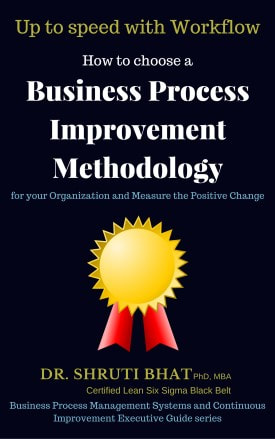
How to Choose a Business Process Improvement or Continuous Improvement project?

1/16/2020

0 Comments

 
A business process improvement project within an organization usually starts out with statements like “We have this problem and we think this is the issue that must be sorted out”. In my experience, 9 times out of 10, the cause of the problem is radically different from what one ‘thinks’ is the issue. Hence, the precursor to choosing a process improvement project is to acknowledge that there is a problem whose root cause(s) must be first be identified before going any further with the process improvement idea.

Once you have an idea of the ‘real’ issue(s) or the ‘root cause(s)’ which must be addressed, you must establish what sort of improvement you are seeking. Because a goal provides the  context for determining as well as designing  an action plan. For example, the improvement steps to save $1000 via a process improvement campaign are obviously far different from the steps to save $100,000 or $1M - but that’s also the only way you can draw a project's finishing line and establish whether that project was a success.
​
Also, the journey for reaching goals may vary and the execution plan documents the road map for achieving the goal.
​
All popular continuous improvement methodologies such as Lean, Six Sigma, Hoshin Kanri, Lean Six Sigma, Kaizen , Kanban etc. incorporate the same focus on setting goals that are easily understood, across an organization.
​
Remember: Regardless of the Continuous Improvement methodology being employed, the goal must be set before selecting a process improvement project, because a project is largely defined by what it is supposed to accomplish.

​You may need multiple process improvement projects to achieve a set of goals or often multiple projects to achieve one single goal. A standard line of action while choosing process improvement goal is based on the study of ‘Variation Journal’.
Continuous improvement tools, 30 continuous improvement tools for investigation and business process improvement, bpm, 18 different continuous improvement methodologies to increase productivity, organizational excellence and decrease cost, business process management and continuous improvement executive guide series book, shruti bhat
Variation Journal as the name implies, is a record of process variation(s) observed throughout the lifetime of a process. Upon scrutinizing this process variation record, any process that elicits a ‘Common Cause’ variation becomes a potential candidate for improvement.

Usual process improvement project pick strategies include- selecting those processes that save maximum money, are easiest or fastest to complete, solve an obnoxious problem, or a process that adversely affects employee working, or where the process improvement is hardest to accomplish (with the idea of 'getting the hard stuff out of the way' will provide serious onward momentum for all subsequent process improvement work).

Tip: Process improvement project success depends on the goal set up, as well as, a sound execution plan before you go about implementing process changes.

In my career as a Global Continuous Improvement Leader spanning a decade, I have found that, using Agile during process change implementation, paves way to guaranteed success with process improvement campaigns.

With Agile management the execution plan becomes a series of sprints instead of one long comprehensive plan.

Tip: Note that Agile works best in environments of frequent changes or development of a new product line, where new features and obstacles are constantly introduced and need to be managed.
To learn more about how Shruti can help your organization achieve new heights or to book a Workshop, Contact Dr. Shruti Bhat via Form or WhatsApp

Follow Shruti on Twitter, Facebook, YouTube, LinkedIn


​Keywords and Tags:
#ContinuousImprovement #QualityImprovement  #BusinessProcessManagement   #BPM
0 Comments

How to Improve Operational Efficiency? A Lean Kaizen Case Study

11/27/2019

0 Comments

 
how to improve operational efficiency_a Lean Kaizen case study
​Lean Kaizen Case study

Problem: A Canadian Pharmaceutical company had production issues with fifteen products and this consequently increased production back-orders. How to improve operational efficiency?

Due Diligence:  Conducted a value stream map to identify potential cause(s) for the back order situation. Additionally technical processes of production were also evaluated. Both technical processes as well as operational processes had snags and must be improved.

Solution: Lean Kaizen methodology was employed. Pharma being a regulated industry, the regulatory impact of proposed process change must be studied prior to embarking on process improvement journey. Regulatory impacts studied were- statutory compliance, licenses, tax breaks, sales permission etc. A protocol for process improvement for all 15 products in a tiered fashion was designed. Appropriate modifications to production planning and concerned operational processes were undertaken.

Result Dashboard:
  • Process improvements for all 15 products was completed within time-scope-budget.
  • Process improvements of 8 products were done without need for statutory re-approvals.
  • Back order status was reversed; market demands are being met timely.
  • Process improvements for balance 7 products were done without need for beta testing/ bio-equivalence studies.
  • Overall saved around 15% of total budgeted expenses for this project basket.
To learn more about how Shruti can help your organization achieve new heights or to book a Workshop, Contact ​Dr. Shruti Bhat via Form or WhatsApp
​
Follow Shruti on Twitter, Facebook, YouTube, LinkedIn


​​Keywords and Tags:
#ContinuousImprovement   #Innovation  #OperationalEfficiency  #Lean  #Kaizen  #ProductivityImprovement
0 Comments

Kaizen For Productivity Improvement Of Pellet Manufacturing: A Case Study

10/23/2019

0 Comments

 
Learn how implementing Kaizen improved productivity of pellet manufacturing by 28%. For details checkout the video below-
To learn more about how Shruti can help your organization achieve new heights or to book a Workshop, Contact ​Dr. Shruti Bhat via Form or WhatsApp

Follow Shruti on Twitter, Facebook, YouTube, LinkedIn

​Keywords and Tags:
#ContinuousImprovement   #Innovation
0 Comments
<<Previous
Forward>>

    New Book Released!

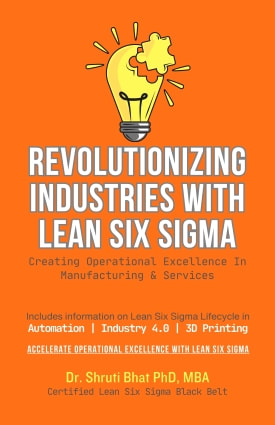
    Revolutionizing Industries with Lean Six Sigma

    Shruti's YouTube Channel ...

    Picture

    Blog Categories

    All
    3D Printing
    Agile
    Artificial Intelligence
    Automation
    Biotechnology
    Books
    Business Continuity
    Business Turnaround
    Case Studies
    Change Management
    Checklists
    Chemical Industry
    Continuous Improvement
    Design Thinking
    Digitalization
    Drug Delivery
    External News Links
    Hall Of Fame
    Healthcare
    Hoshin Kanri
    HR Development
    Innovation
    Insights
    ISO
    Just In Time
    Kaizen
    Leadership
    LEAN
    Lean Six Sigma
    Life Sciences
    Machine Learning
    Manufacturing
    Medical Devices & Prosthetics
    Mistake Proofing

    Motivational Cards
    MSMEs
    Nanotechnology
    Operational Excellence
    OpEx Models
    Packaging

    Patents
    Personal Products
    Process Improvement
    Product Development
    Productivity Increase
    QbD
    Quality Management
    R&D Leadership
    Robotics
    Service Industry
    Six Sigma
    Strategy
    Supply Chain Logistics
    Telecom Industry
    Templates
    TQM
    Videos
    Voice Of Customer
    Whitepaper
    Workshops

    Shruti's books...

    Picture
    top ten strategic decision-making tools for operational excellence

    shruti bhat, business process management, continuous improvement
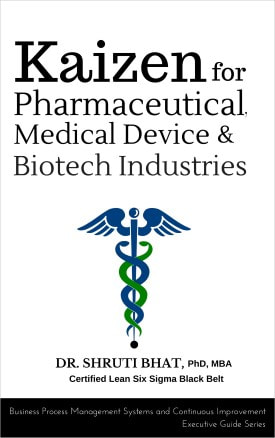
    kaizen for pharmaceutcials, medical devices and biotech industry book by Dr Shruti Bhat
    Book on Continuous improvement tools by Dr Shruti Bhat
    kaizen for leaders, continuous process improvement tool to increase profit and organizational excellence by shruti bhat
    kaizen, shruti bhat, continuous improvement, quality, operations management
    how to lead a successful business transformation
    leading organizations through crisis
    emotional intelligence
    how to overcome challenges of creating effective teams
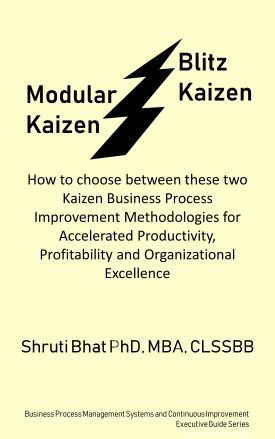
    modular kaizen Vs Blitz kaizen
    How to increase employee engagement as a new boss

Connect with Dr. Shruti Bhat at- ​YouTube, LinkedIn​ and X

© Copyright 1992- 2026 Dr. Shruti Bhat ALL RIGHTS RESERVED.
See Terms and Conditions details for this site usage.
Picture
Subscribe to PharmaOps Consulting YouTube Channel
Subscribe to Operational Excellence Academy YouTube Channel
​Subscribe to Operational Excellence Academy YouTube Channel
SHRUTI BHAT, CONTACT
Click to connect.
Disclaimer:
  • All content (and in all formats) provided on this site is for educational purposes only. It does not constitute legal, regulatory, quality, financial, medical or professional advice. If you wish to apply ideas contained on this site, web pages, resources bank, tools and/or blog; collectively referred to as website, you are taking full responsibility for your actions. 
  • No professional-client relationship is created by reading or using this content. 
  • ​To the fullest extent permitted by law, the author(s), Dr. Shruti Bhat and website owner disclaim liability for any loss or damage arising from reliance on the information contained herein. Read full disclaimer here before reviewing the site.
Created by Macro2Micro Media